Texas $10 Billion Gas Plant Fund Moves Faster Than Federal Programs
Texas Energy Fund produces its first natural gas plant with $10 billion in state capital. Moves faster than federal programs and creates new framework for power procurement decisions.

The Opening Shot
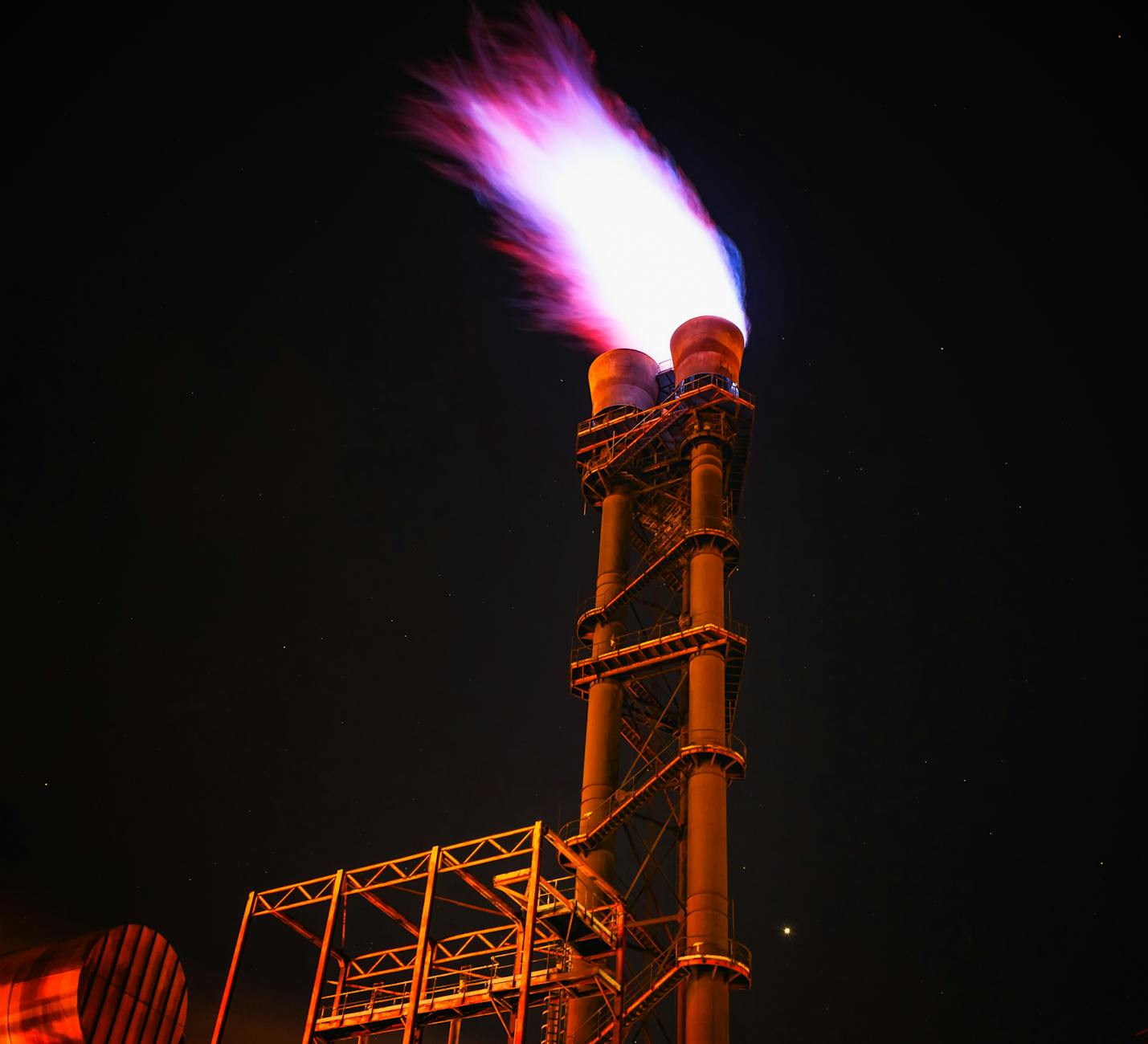
Texas voters handed their state government $10 billion to fix the grid. That money just produced its first power plant. It runs on natural gas. Not wind. Not solar. Not hydrogen. Dispatchable molecules that show up when the temperature hits 10 degrees or 110. The Texas Energy Fund's first financed project is a statement about where grid capital flows when reliability is the mandate and politicians are accountable to ratepayers who remember freezing in the dark.
The Signal Nobody Should Ignore
This is not a ribbon cutting story. It is a capital allocation signal. Texas created a state level financing mechanism for power generation that operates entirely outside the federal infrastructure apparatus. No DOE loan office. No multiyear permitting queue. No political negotiation across 50 senators. Voters approved the fund in November 2023. The first plant is already financed. That velocity matters. Federal infrastructure programs authorized under the Inflation Reduction Act and the bipartisan infrastructure law have moved at bureaucratic speed. Texas moved at market speed.
The strategic weight here is the technology choice. The fund could have backed battery storage, solar plus storage, or small modular nuclear. It backed a natural gas plant. That tells you what Texas regulators and fund administrators believe about baseload reliability. It tells you what the political mandate from voters actually demands. And it sets a precedent for every subsequent dollar that flows from this $10 billion pool. If you are making capital decisions about where to build, where to expand, or where to source power for the next decade, this is your leading indicator.
Source: Federal Reserve Economic Data (FRED) | NeuralPress analysis
That trajectory is the context for every decision below. WTI crude sat in the low $60s through most of late 2025, according to Federal Reserve economic data, bottoming near $57.97 in December 2025. Then it climbed sharply to $100.32 by April 2026. Natural gas pricing does not track crude barrel for barrel, but the energy commodity complex moves in sympathy. Operators who locked in power purchase agreements or fuel contracts during the trough are now sitting on significant cost advantages. Those who waited are paying the premium.
Capital Allocation Just Got a New Playbook
The Texas Energy Fund creates a financing structure that competes directly with traditional utility rate base capex and federal grant programs. That is a $10 billion disruption to how power generation gets funded in the largest energy market in the country. For CFOs and COOs evaluating expansion capital, the decision tree just added a branch.
Here is the framework. If your operation requires 50 megawatts or more of reliable power, you now have three paths in Texas. First, negotiate with an incumbent utility and accept their rate structure and timeline. Second, pursue federal programs and accept the permitting and compliance overhead. Third, engage directly with generators backed by the Texas Energy Fund, who carry lower cost of capital because of state backing and can move faster because the regulatory framework is already built.
The math favors the third option for energy intensive operations. A generator with state backed financing can offer more competitive power purchase agreement terms than a merchant plant borrowing at market rates. With WTI climbing from $57.97 in December 2025 to $100.32 by April 2026, the fuel cost environment is shifting fast. Locking in a long term agreement with a Fund backed plant while their capital costs are low gives you a hedge against both commodity volatility and capacity scarcity. Every month you delay is a month closer to full subscription on that capacity.
Site Selection Math Changed Overnight
Manufacturing reshoring and data center expansion have created a national competition for reliable power. States are pitching tax incentives, workforce programs, and permitting speed. Texas just added something none of them have. A $10 billion dedicated fund that finances the actual generation capacity your facility needs to operate.
The decision for operations leaders evaluating new sites is no longer just about land cost, labor availability, and logistics. It is about power certainty. Winter Storm Uri in 2021 exposed what happens when generation capacity fails. Insurance costs for Texas industrial facilities spiked. Some manufacturers added onsite backup generation at $1,500 to $2,500 per kilowatt of installed capacity. That is dead capital unless the grid fails again.
Fund backed generation changes that calculus. If new gas plants are being built with state capital specifically to add dispatchable capacity, the probability of another Uri scale failure drops. That means your backup generation budget can shrink. Your insurance premiums should reflect lower risk. And your site selection model should weight Texas more heavily than it did 18 months ago. Run the scenario. Compare a Texas site with Fund backed power availability against a comparable site in Georgia, Ohio, or Arizona where power comes through traditional utility channels. The total cost of energy reliability is the variable that separates the two.
The Regulatory Precedent Other States Will Copy
Texas is not the only state where voters remember grid failures. California has rolling blackouts baked into its summer forecast. The Midwest faces capacity shortfalls as coal plants retire faster than replacements come online. The southeastern grid is straining under population growth and industrial demand. Every one of those regions has political pressure to do something.
The Texas Energy Fund is now a template. Expect at least two to three other states to propose similar voter approved funds within the next 24 months. For operators with facilities across multiple states, this creates a new dimension of regulatory intelligence. You need to track not just utility rate cases and federal energy policy but state level generation financing programs that could reshape your power cost structure in specific geographies.
The framework for monitoring this is straightforward. Watch state ballot initiatives tied to energy infrastructure. Track legislative sessions in states with recent reliability failures. Map your facility footprint against those states. When a fund gets approved, move early. The first generators to secure financing will offer the best terms. By the time the fund is 60 percent deployed, the competitive advantage of early engagement is gone. First mover advantage applies to power procurement the same way it applies to market entry.
Workforce and Supply Chain Pressure on Gas Plant Buildout
A $10 billion fund does not build power plants. People and equipment build power plants. The skilled labor pool for gas turbine installation, balance of plant construction, and high voltage interconnection is already tight. The Bureau of Labor Statistics shows construction employment in power generation has not kept pace with announced projects nationwide. Texas is about to pour accelerant on that shortage.
For operators in the industrial supply chain, this is a demand signal. Turbine manufacturers, electrical contractors, controls integrators, and EPC firms serving the Texas market should expect compressed timelines and premium pricing. If you sell into that chain, your pipeline just expanded. If you buy from that chain, your lead times just got longer.
The decision is whether to secure capacity now. If you are planning any facility expansion, backup generation project, or electrical infrastructure upgrade in Texas over the next 36 months, get your contractors and equipment orders locked before the Fund backed projects absorb available capacity. The WTI price surge from $57.97 to $100.32 between December 2025 and April 2026 already signals an energy sector that is heating up broadly. Layer a $10 billion state fund on top of that and you have a construction market that will not get cheaper or less congested.
The Question That Should Keep You Up Tonight
Texas proved a state can move $10 billion into grid infrastructure faster than Washington can move $10 million through a grant program. The first plant burns gas. The next dozen probably will too. If your five year capacity plan assumes the status quo on power availability, cost, or reliability in any state you operate in, that plan is already obsolete. The real question is not whether Texas got this right. It is whether you are positioned to benefit before the rest of the market catches up.
This article is part of the Industry Intelligence series on NeuralPress. New analysis published daily.