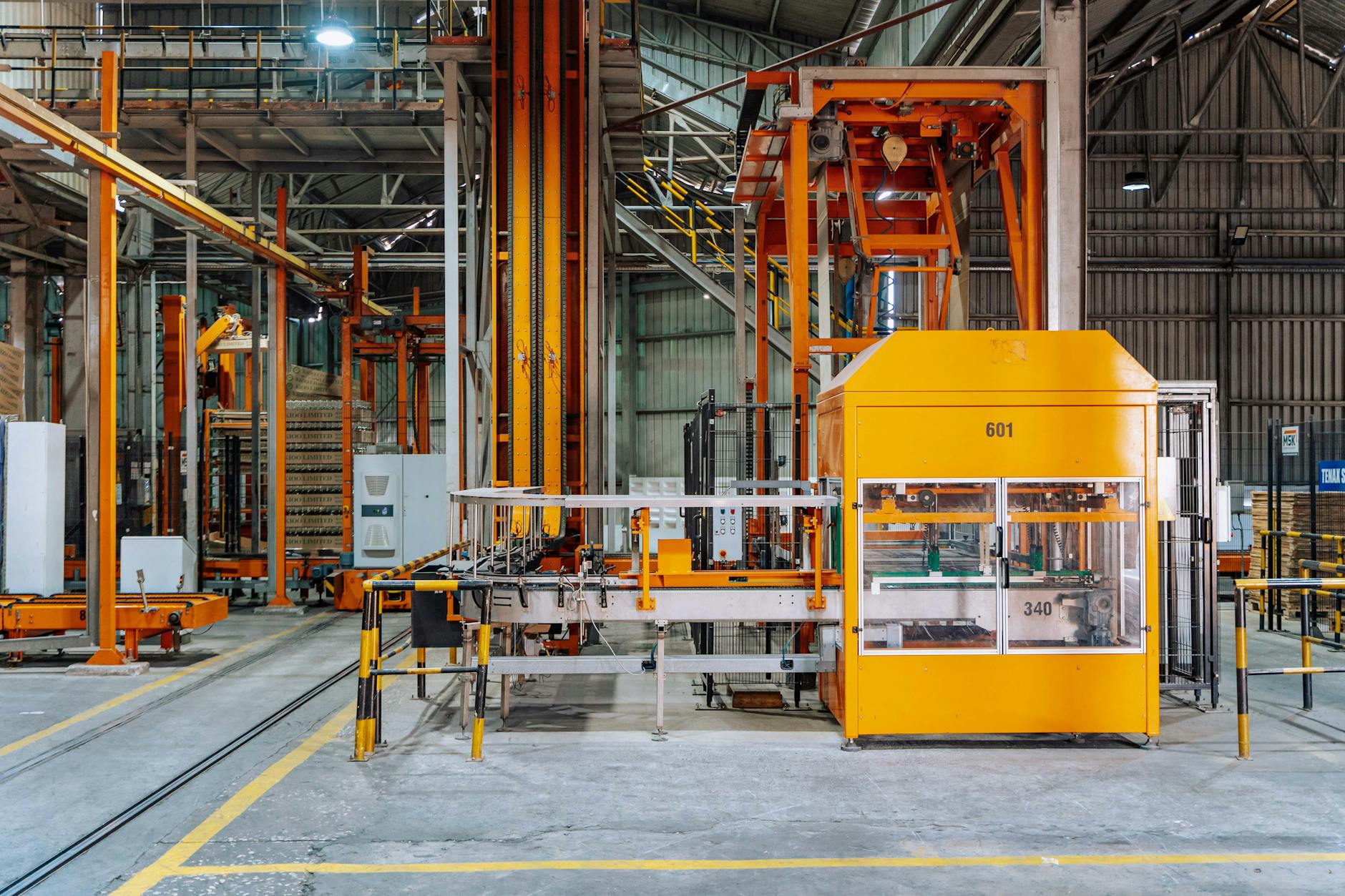
Eaton Drops $30 Million on European Aerospace Manufacturing
Eaton's $30 million European aerospace additive manufacturing center forces US operators to decide: regionalize production now or lose qualified supplier status within 36 months.


Eaton just put $30 million worth of conviction into a single thesis: global aerospace supply chains are too fragile to survive the next disruption. The company opened a dedicated additive manufacturing center in Europe, purpose built to produce aerospace components regionally and cut transatlantic logistics risk. This is not a prototype lab. This is production infrastructure for one of the most regulated industries on earth.
The Signal
Eaton's new European aerospace additive manufacturing center is not a technology showcase. It is a strategic repositioning of production capacity designed to serve European aerospace customers without crossing an ocean. The facility handles production grade additive manufacturing for components that must meet AS9100 and FAA certification standards. That is a massive credibility marker. When a $23 billion diversified industrial company builds regional production for its most demanding customer base, it is telling you something about where global manufacturing governance is heading.
The move also validates additive manufacturing as a production technology, not a prototyping curiosity. Eaton is printing flight critical parts. That changes the capital planning calculus for every mid market manufacturer still treating additive as R&D overhead. The message is clear: regionalization is not a contingency plan. It is the plan.
Source: Federal Reserve Economic Data (FRED) | NeuralPress analysis
The Industrial Production Index tells a quieter version of the same story. According to Federal Reserve data, US industrial production sat at 96.17 in July 2024 and has climbed modestly to 98.70 by June 2026. That is a 2.6% increase over two years. Not a boom. Not a collapse. A slow grind upward that reflects manufacturers adding capacity carefully, in targeted pockets, rather than broadbased expansion. That trajectory is the context for every decision below. The economy is giving operators room to invest, but not room to waste capital on the wrong bets.
Capital Allocation in an Era of Fragmented Scale
The hardest question Eaton's move raises for US manufacturers is not whether to regionalize. It is how to fund it without destroying unit economics. Additive manufacturing equipment for production grade aerospace work runs $500,000 to $2 million per system. Qualification and certification add another 12 to 18 months before a single part ships revenue. That is real capital locked up before a single dollar comes back.
Federal Reserve industrial production data shows output at 98.70 as of June 2026, up from a trough of 95.44 in October 2024. That recovery, while modest, signals enough demand stability to justify capital deployment. But the deployment has to be surgical. Eaton can absorb regional duplication across a $23 billion revenue base. A $200 million manufacturer cannot.
The decision operators face is binary. Invest in regionalized additive capacity now, while equipment lead times are manageable and talent is available. Or wait, and watch competitors lock up the qualified supplier positions that aerospace primes will require within 36 months. The framework is straightforward: map your top 10 aerospace part numbers by volume and margin, model the per unit cost delta between traditional offshore machining and domestic additive production, and identify which parts cross the breakeven threshold at current volumes. If three or more parts pencil out, the capital case writes itself. If none do, your problem is not technology. It is product mix.
Supply Chain Mapping Is Now a Competitive Weapon
Eaton's regionalization move creates a cascading effect through the aerospace supply chain that most procurement teams are not ready for. When a tier one supplier like Eaton moves production to a new region, it reshuffles its own supplier base. Raw material sourcing shifts. Qualification timelines reset. And every manufacturer downstream has to answer a question they have been avoiding: do you actually know where your critical components come from?
The operational data supports urgency. Industrial production dipped to 97.13 in November 2025 before recovering to 98.70 by mid 2026. Those fluctuations map to real disruptions in component availability that procurement teams felt as extended lead times and expediting costs. The manufacturers who weathered those months best were the ones who had already mapped their supply chains three tiers deep.
The decision for supply chain directors is concrete. Identify every single source dependency in your aerospace and defense portfolio. For each one, determine whether the supplier is investing in regional capacity or still running a centralized global model. Suppliers still running centralized models are the ones most likely to face tariff exposure, logistics delays, and qualification gaps in the next 24 months. Build a qualified alternate for each one. The framework is a simple risk matrix: plot each supplier on two axes, concentration risk and regionalization investment. Any supplier in the high concentration, low regionalization quadrant is a ticking clock.
Workforce Pipeline Decides Who Wins Regionalization
Every conversation about additive manufacturing capacity eventually hits the same wall: who is going to run these machines? Eaton's European facility requires metallurgists who understand powder bed fusion, quality engineers certified in aerospace additive standards, and technicians trained on systems that most vocational programs do not teach. The same talent gap exists in the US, and it is wider.
The industrial production index hovering around 98.70 means manufacturers are running close to prepandemic utilization. That leaves thin margin for error on staffing. Adding additive manufacturing capability requires at least two to three specialized operators per shift, plus quality inspection personnel trained in CT scanning and nondestructive testing methods specific to additive parts. Those people do not exist in surplus anywhere.
Plant managers evaluating additive investments need to start with a workforce audit, not an equipment RFQ. The decision is sequencing: hire and train first, then buy machines. The reverse order, which is the instinct for most capital planners, creates expensive equipment sitting idle while you scramble to find operators. Partner with community colleges and technical programs now. Eaton likely spent 18 months building its talent pipeline before announcing the facility. US manufacturers who start that clock today are already late. The framework is a 90 day sprint: identify two local training partners, define the specific certifications your operation will require, and fund at least one cohort of trainees before issuing a purchase order for equipment.
Pricing and Margin Pressure Will Follow Regionalization
Here is the part nobody wants to talk about. Regionalized production costs more per unit. Period. When Eaton builds a European facility to serve European customers, it sacrifices the scale economics of centralized production. The same math applies to any US manufacturer who builds domestic additive capacity instead of sourcing from a lower cost geography. The question is whether customers will pay for it.
In aerospace, the answer is increasingly yes. Primes are already building supply chain resilience premiums into their procurement models. Lead time reduction from 16 weeks to 4 weeks has quantifiable value when a grounded aircraft costs an airline $150,000 per day. But outside aerospace, the pricing conversation is harder. Industrial distribution customers accustomed to offshore pricing will resist cost increases even when the value proposition includes shorter lead times and reduced inventory carrying costs.
Federal Reserve data shows industrial production growing at just 2.6% over two years. That is not an environment where manufacturers can pass through significant cost increases without justification. The framework for pricing regionalized production requires three inputs: the documented cost of supply chain disruption over the past 36 months, the inventory carrying cost reduction from on demand regional production, and the tariff and logistics cost trajectory for the next 24 months. Build that case with real numbers from your own operation. Abstract arguments about resilience do not survive procurement negotiations. Specific dollar figures do.
Eaton did not regionalize because it is fashionable. It regionalized because the math on global supply chain risk finally broke in favor of local production for its highest value product lines. Every US manufacturer in aerospace, defense, and precision industrial segments faces the same math. The only variable is whether you run the numbers before or after your competitor does.
This article is part of the Industry Intelligence series on NeuralPress. New analysis published daily.