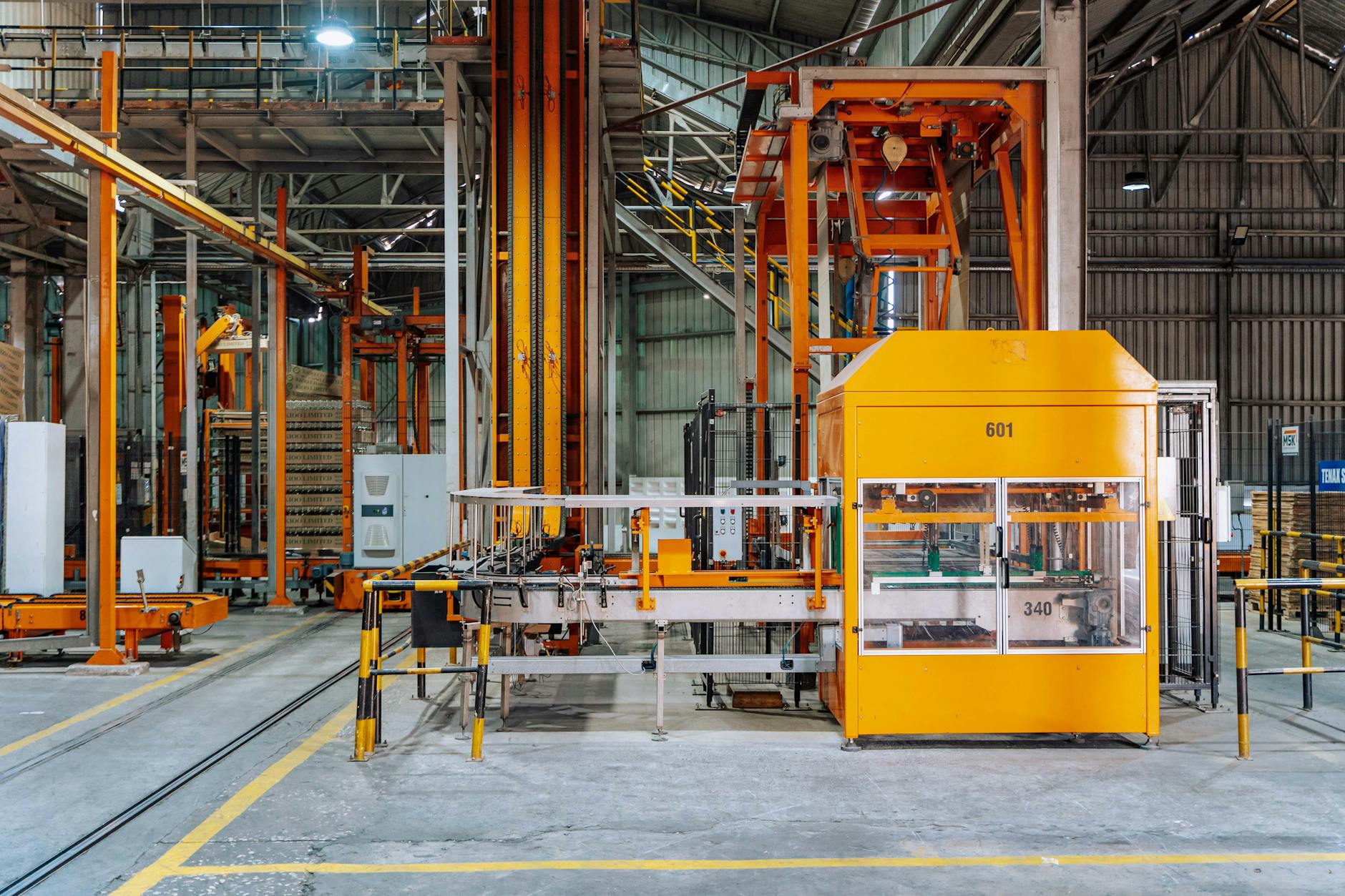
GXO Abandons Retail Fulfillment for Industrial Distribution
GXO Logistics is pulling capacity from retail fulfillment to chase higher margin industrial distribution contracts. The capacity window closes fast.


The world's largest pure play contract logistics provider is walking away from retail. GXO Logistics is actively steering capacity out of e commerce and consumer fulfillment and toward B2B industrial clients, driven by one number that matters: margin. The company's leadership has publicly stated that industrial distribution contracts deliver measurably higher profitability than the retail fulfillment work that defined the 3PL boom of the last decade. That is not a pivot. That is a verdict.
The Signal Nobody Should Ignore
GXO's repositioning is not a quiet portfolio adjustment. It is a structural declaration about where contract logistics profitability lives. GXO predicts greater profits in its shift from retail and e commerce to B2B, and the reasoning maps directly to what industrial operators already know intuitively. B2B logistics relationships are stickier. The shipment profiles are more predictable. The service level expectations are demanding but rational. And most importantly, industrial clients pay rates that reflect the complexity of what they move.
When the largest pure play 3PL on Earth tells the market it is reallocating warehouse capacity and operational talent toward manufacturing, automotive, aerospace, and industrial distribution, that is not a press release. That is a capacity signal. Every distribution executive with a contract up for renewal in the next 18 months needs to understand what that signal means for pricing, availability, and competitive positioning.
Source: Federal Reserve Economic Data (FRED) | NeuralPress analysis
The industrial production trajectory tells the supporting story. According to Federal Reserve data, the Industrial Production Index has climbed from 96.17 in July 2024 to 98.70 by June 2026, a 2.6% increase that reflects steady, grinding expansion rather than a spike. That slow upward trend is precisely the demand environment that makes GXO's bet rational. Industrial volumes are not booming. They are reliably growing. And reliable growth is exactly the revenue profile a logistics company wants when it is walking away from the volatility of consumer e commerce.
Lock Capacity Before the Window Closes
The first operational reality is time. GXO's shift means 3PL capacity for industrial distribution will tighten over the next 12 to 18 months. Not catastrophically. Gradually. That gradual tightening is more dangerous than a shock because it lets operators procrastinate until the best slots are gone.
Here is the math. If industrial production holds its current trajectory, moving from 97.08 in January 2026 to 98.70 by June 2026, that is roughly a 1.7% acceleration in just six months. Multiply that demand growth across every manufacturer, distributor, and OEM competing for 3PL warehouse space, and the capacity picture gets uncomfortable fast.
The decision for any VP of operations or supply chain leader is straightforward. Do you initiate multiyear capacity conversations now, while GXO and its competitors are still building their industrial client portfolios and hungry to lock in anchor tenants? Or do you wait until 2027 when those same providers have filled their facilities and your negotiating leverage is gone?
The framework is simple. Audit every 3PL contract that expires before Q3 2027. Rank them by strategic importance. For the top tier, start renegotiation conversations within 30 days. For the rest, build a shortlist of alternative providers now while the market is still in transition. The operators who move first get the best rates and the best service commitments. Everyone else gets whatever is left.
Benchmark Your Rates Against the New Reality
GXO's announcement exposes a pricing inconsistency that has persisted across contract logistics for years. Many industrial distributors are still paying rates that were benchmarked against retail fulfillment economics. Those rates no longer reflect the market's view of industrial distribution's value.
If GXO is publicly telling investors that B2B industrial contracts deliver higher margins than retail, then the rate differential between those segments is real and measurable. That means one of two things for your current 3PL relationship. Either your provider already recognizes your segment's premium value and is pricing accordingly, giving you the service levels and capacity commitments that justify higher rates. Or your provider is charging you industrial premium rates while delivering retail grade service because they have not yet restructured their operations around this new segmentation.
The decision every distribution executive faces is a benchmarking exercise with teeth. Pull your current per unit logistics costs. Compare them against what GXO and competing 3PLs are quoting for new industrial contracts. If you are paying above market, renegotiate immediately using GXO's public pivot as leverage. Your provider knows the competitive landscape just shifted. If you are paying below market, understand that your current provider may deprioritize your account as they chase higher margin industrial clients. Either scenario demands action, not observation.
The industrial production data supports this urgency. Output has been flat enough, oscillating between 95.4 and 98.7 over two years, that no 3PL can claim demand surge pricing. Any rate increase your provider proposes should be tied to documented service improvements, not manufactured scarcity.
Model the Risk of Retail Logistics Disruption
Here is the angle most industrial operators will miss. As 3PLs like GXO pull capacity out of retail fulfillment, the retailers and e commerce players left behind will face rising logistics costs and shrinking provider options. That sounds like someone else's problem. It is not.
If your company runs any hybrid distribution model where you sell through both B2B channels and direct to consumer or retail channels, the retail side of your logistics network is about to get more expensive and less reliable. The 3PL providers who specialize in consumer fulfillment will raise rates to compensate for lost scale as peers like GXO exit. Smaller fulfillment providers may fold entirely.
The decision for CFOs and COOs is a modeling exercise. Take your current e commerce or B2C fulfillment spend. Apply a 15% to 25% cost increase over the next 18 months as the 3PL market for retail contracts contracts. Then determine your break even point for insourcing that fulfillment. For companies where e commerce represents less than 10% of revenue, insourcing probably does not pencil out. Absorb the cost increase and pass it through to pricing. For companies where e commerce represents more than 20% of revenue, the math on a dedicated fulfillment operation starts looking attractive, especially if you can co locate it with existing industrial distribution infrastructure.
Federal Reserve industrial production data shows output holding steady around 98.7 as of mid 2026. That stability means your core B2B volumes are predictable enough to anchor a facility investment. The question is whether you want to subsidize a shrinking retail logistics market or redirect that capital toward infrastructure you control.
Use Logistics Reliability as a Competitive Weapon
The downstream competitive effect of GXO's pivot is subtle but powerful. Over the next 18 months, a performance gap will emerge between industrial companies that locked in premium 3PL capacity and those still running on retail grade logistics networks. That gap will show up in fill rates, delivery times, and inventory accuracy.
If you are a distribution leader selling against competitors who have not yet adjusted to this market shift, your logistics reliability becomes a differentiator worth naming in every customer conversation. Industrial buyers, especially in aerospace, automotive, and heavy manufacturing, evaluate suppliers on delivery performance as aggressively as they evaluate price. A competitor whose 3PL provider is distracted by a strategic pivot or whose fulfillment partner is struggling with the retail exodus will miss shipments. You will not.
The framework here is positioning, not salesmanship. Document your logistics performance metrics. Make your on time delivery rate, order accuracy, and lead time consistency visible to procurement teams at your key accounts. When GXO's transition creates turbulence in competing supply chains over the next year, your documented reliability becomes the easiest close your sales team has ever made.
The industrial production index sitting at 98.70 means demand is present but not overwhelming. In that kind of steady state market, customers do not switch suppliers for price. They switch for reliability. Make sure the reliability story is yours to tell.
GXO just drew a line in the logistics market that separates industrial distribution from everything else. The operators who treat that line as a starting gun will secure the capacity, rates, and competitive positioning that define the next cycle. The ones who treat it as background noise will spend 2027 wondering why their logistics costs climbed and their service levels dropped.
This article is part of the Industry Intelligence series on NeuralPress. New analysis published daily.