
Budget 15% of Factory Automation Spend for Training or Watch ROI Collapse
Companies underbudget workforce development by 50% or more in smart factory rollouts. The math is simple: 15% of automation capex must go to training infrastructure or ROI collapses.

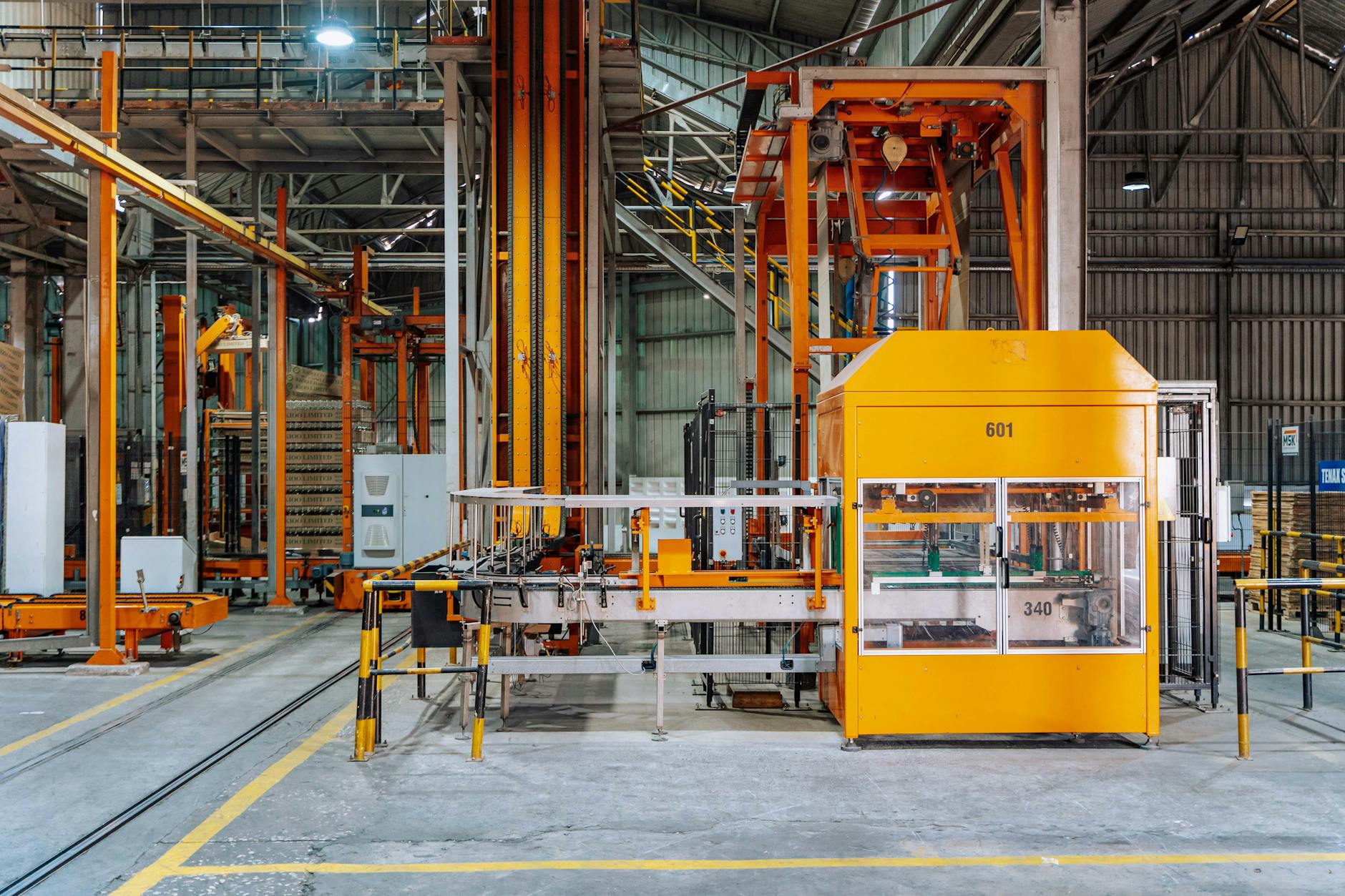
Opening Hook
The US has poured hundreds of billions into manufacturing capacity since 2022. IRA incentives, reshoring momentum, and AI driven automation have turned factory investment into a national priority. But here is the number nobody wants to talk about: companies are underbudgeting the human capital side of smart factory rollouts by 50% or more. The machines are arriving. The people who can run them are not.
The Signal
Forbes contributor Ethan Karp lays out the core tension in a recent piece titled Who Will Run The Factory Of The Future?. The argument is straightforward and damning. Smart factories need technicians with hybrid skills. Mechanical aptitude plus data analysis plus AI system management. The traditional talent pipeline was never designed to produce that worker. Four year degree programs are mismatched to factory floor needs. Community college programs are underfunded and misaligned to specific equipment stacks. And the external labor market for these hybrid skill workers is essentially dry.
Meanwhile, the Industrial Production Index has crawled from 96.17 in July 2024 to 98.70 as of June 2026, according to Federal Reserve data. That is a 2.6% increase over two years. Factories are running, but barely accelerating. The production curve is flat relative to the capital being deployed. Something is absorbing the investment without translating it to output. That something is workforce readiness. Every smart line that sits underutilized because nobody on the floor can troubleshoot the AI driven quality system is a capex dollar earning zero return.
Source: Federal Reserve Economic Data (FRED) | NeuralPress analysis
That trajectory is the context for every decision below. Industrial production should be surging given the capital flowing into manufacturing. Instead it is crawling. The gap between investment and output is a workforce gap, and it is widening.
The Hidden Capex Line Item Nobody Is Budgeting
Here is the math most operators are getting wrong. If you are spending $10 million on a smart factory line, your workforce development budget should be $1.5 million to $2 million. Not $200,000 for a vendor training package. Not zero because you assumed the integrator would handle it. Fifteen to twenty percent of automation capex needs to go to parallel training infrastructure. That means simulation based training systems, paid apprenticeships, internal certification programs, and dedicated training time that pulls people off production.
The decision facing every VP of Operations right now is whether to treat workforce development as a line item or a program. A line item gets cut in the next budget cycle. A program gets staffed, measured, and defended. Companies building internal training programs are reporting faster ramp times and lower turnover than those hiring externally. That is not a soft benefit. That is the difference between a smart line reaching full throughput in four months versus fourteen.
The framework is simple. Before any automation equipment hits the floor, audit your current workforce against the skill profile that equipment demands. Map every gap. Build a training timeline that runs ahead of the installation timeline, not behind it. If your people cannot troubleshoot the system on day one of commissioning, you have already failed the ROI model your CFO approved. The Industrial Production Index sitting at 98.70 after two years of massive capex tells you this is an industry wide failure, not an isolated one.
Talent Pipelines Are Infrastructure Now
Stop thinking about hiring. Start thinking about building. The companies winning the workforce game in smart manufacturing are partnering with local community colleges to co develop technician certification programs aligned to their specific equipment stacks. They are creating paid apprenticeships that function as proprietary talent pipelines. They are not posting job listings on LinkedIn and hoping someone with five years of PLC programming experience applies.
The decision here is structural. Do you build a talent pipeline you own, or do you compete on the open market for a shrinking pool of hybrid skill workers? The open market math does not work. Every manufacturer in America is chasing the same profile. Mechanical aptitude. Data literacy. AI system familiarity. Comfort with continuous learning. That person barely exists in the wild. You have to grow them.
The framework starts local. Identify the two or three community colleges within commuting distance of your facilities. Approach them with a co development model, not a wish list. Bring your equipment specs. Bring your skill gap audit. Fund a cohort program that produces graduates who can walk onto your floor and be productive in weeks, not months. The cost of a co developed certification cohort is a fraction of what you will spend on recruiter fees and signing bonuses in a market where everybody is fishing in the same pond. Retention data backs this up. Workers trained internally stay longer because they have a career arc, not just a job.
The CFO Model Is Broken
Most automation ROI models treat labor as a constant. They assume the workforce will be available, skilled, and ready when the equipment arrives. That assumption is destroying returns across the industry. The correct model treats workforce readiness as an explicit gating factor. If your technicians cannot operate the system at rated capacity within your modeled ramp period, every number downstream is fiction.
Federal Reserve data shows industrial production has been essentially flat for two years despite historic levels of manufacturing investment. The index bounced between 95.44 and 98.70 across 24 months. That is not the output curve of an industry capturing its capex investments. That is the output curve of an industry throttled by a constraint it did not budget for.
The decision for CFOs is whether to restructure the ROI model before the next capital request or after the current project underperforms. Restructuring means adding workforce development spend as a required capex component, not an optional operating expense. It means modeling ramp timelines based on actual skill availability, not vendor promises. And it means allocating capital for simulation based training systems that allow workers to learn on digital twins instead of production equipment. Every hour of training on live equipment is an hour of lost production. Simulation systems eliminate that tradeoff. They cost real money. They also prevent the scenario where a $15 million smart line runs at 40% utilization for a year because your team is learning on the job.
Recruiting Has to Change First
The talent acquisition bottleneck is partly self inflicted. Most manufacturers still screen for four year degrees when the job requires aptitude, curiosity, and mechanical intuition. A degree in mechanical engineering does not mean someone can troubleshoot an AI driven vision system on a packaging line. An associate degree from a community college with hands on PLC training might.
The decision facing HR and talent leaders is whether to shift from credential based screening to aptitude based screening. This is not a philosophical argument about inclusion. It is an operational argument about finding people who can actually do the work. Aptitude based screening means testing for problem solving ability, mechanical reasoning, and comfort with technology. It means valuing candidates who have rebuilt a diesel engine in their garage as much as candidates who wrote a thesis on thermodynamics.
The retention side matters equally. Traditional retention programs reward tenure. Show up for five years, get a raise. Smart factory retention programs need to reward continuous upskilling. Every new certification, every new system mastered, every new capability added should translate to compensation and advancement. The worker who can troubleshoot both the robotic arm and the AI quality system is worth more than the worker who can only do one. Pay them accordingly. Build the career ladder around capability accumulation, not years served. The companies that get this right will not just fill positions. They will build the workforce that makes flat production curves a thing of the past.
Closing
The next five years of American manufacturing will not be decided by who spends the most on automation. They will be decided by who builds the workforce that makes automation productive. The machines are a commodity. The people who run them are the competitive advantage. If your smart factory budget does not have a workforce line item equal to 15% of your equipment spend, you are not building a factory of the future. You are building an expensive monument to a plan that cannot execute.
This article is part of the Industry Intelligence series on NeuralPress. New analysis published daily.