
Panthalassa Floating Data Centers Deploy While Oil Hits $102
Panthalassa's ocean node is in the water. With crude at $102 and grid queues past 2028, ocean deployment is a capital allocation decision, not a technology bet.

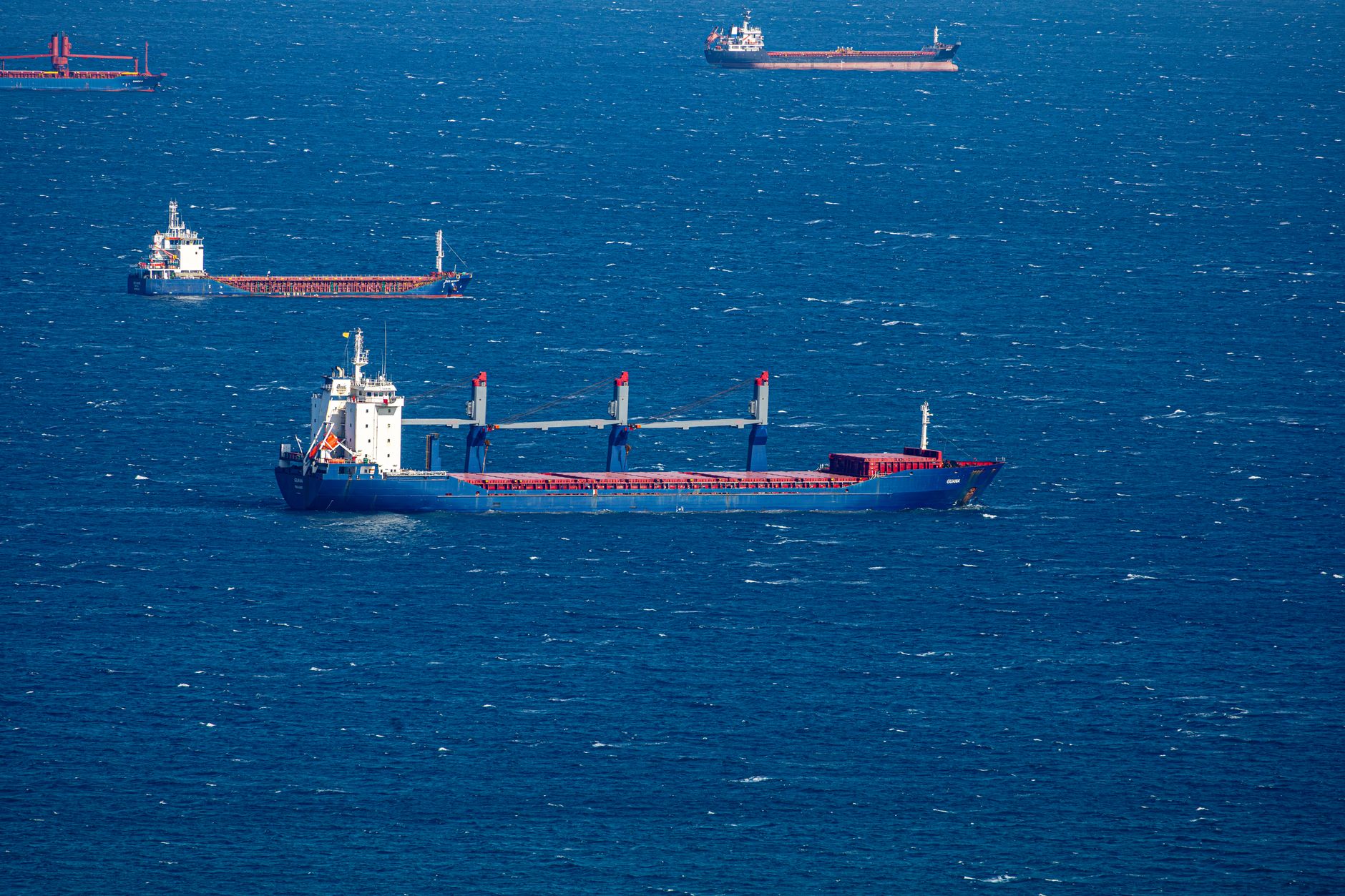
The prototype is already in the water. Panthalassa deployed its Ocean 2 data center node off the Washington state coast in 2025, and the pitch is simple. Skip the grid. Skip the HVAC plant. Skip the three year utility interconnection queue. Drop a compute node in the Pacific and let seawater handle cooling for free. That is not a whiteboard idea. It is a funded test running in open ocean right now.
The Signal
Data center operators across the US are slamming into grid capacity walls. Northern Virginia, the largest data center market on the planet, has utility hookup delays stretching past 2028. Phoenix water tables are a political liability. A single high density AI training rack now pulls north of 100 kilowatts. Multiply that across a campus and you are talking about loads that rival small cities.
Panthalassa's ocean model attacks the two biggest cost centers simultaneously. Seawater provides near infinite cooling capacity at zero compressor cost. And the physical deployment sits outside the congested permitting and interconnection process that strangles land based expansion. If the marine engineering holds and the regulatory pathway clears, this is a grid bypass play that could compress deployment timelines from years to months.
But energy costs are not holding still while this technology matures. WTI crude climbed from $57.97 per barrel in December 2025 to $102.13 by May 2026, according to Federal Reserve economic data. That 76 percent surge in six months reshapes the cost calculus for every power intensive infrastructure decision on the board.
Source: Federal Reserve Economic Data (FRED) | NeuralPress analysis
That trajectory is the context for every decision below. When energy costs nearly double in half a year, the economics of any deployment model that reduces power dependency become dramatically more attractive. It also means the baseline assumptions in every data center capex model built before March 2026 are already wrong.
Capital Allocation Gets a Coastal Option
Traditional data center builds run between $7 million and $12 million per megawatt depending on market, density, and redundancy tier. The biggest variable cost drivers are cooling infrastructure, utility interconnection fees, and real estate. Ocean nodes theoretically eliminate or drastically reduce all three.
But marine engineering is expensive in ways that land based construction is not. Saltwater corrosion, subsea cabling, wave load engineering, and specialized maintenance vessels all carry premiums. The decision framework here is not ocean versus land as a binary. It is portfolio allocation. Operators with constrained land based pipelines should model ocean nodes as incremental capacity that comes online faster, even if per unit costs run 10 to 15 percent higher initially. The value is not cheaper megawatts. It is megawatts that exist 18 months sooner.
With WTI sitting above $100 and natural gas prices following crude higher, the operating expense side of the equation shifts too. Every data center running backup diesel generators just saw fuel costs spike. Ocean nodes that reduce or eliminate generator dependency carry a compounding opex advantage. Operators who model this correctly will treat ocean deployment not as a replacement for terrestrial capacity but as a hedge against grid bottleneck risk. That is a capital allocation decision, not a technology bet.
Energy Infrastructure Faces Demand Destruction in Coastal Markets
If even 5 to 10 percent of planned coastal data center capacity shifts offshore, that represents hundreds of megawatts of load that never hits the local grid. For utilities in the Pacific Northwest, Northern California, and the Mid Atlantic, that is real revenue at risk.
Dominion Energy, Pacific Gas and Electric, and others have committed billions to transmission upgrades driven specifically by data center load forecasts. If ocean deployment scales, some of those investments become stranded or oversized.
The framework for energy executives is scenario planning with an ocean deployment variable. Build three cases. Zero ocean adoption, moderate adoption at 5 percent of new coastal capacity, and aggressive adoption at 15 percent. Run the revenue and rate base implications of each. The moderate case alone could defer $2 billion to $4 billion in planned grid investment nationally. Meanwhile, crude above $102 per barrel means gas peaker plants used to backstop data center reliability are more expensive to run. Ocean nodes that reduce peak grid dependency look better to regulators who approve rate cases. Energy executives who dismiss ocean deployment as experimental are making a forecast without accounting for a variable that already has hardware in the water.
Supply Chain Players Need a Marine Pivot Plan
If you sell cooling towers, chillers, uninterruptible power supplies, or backup generators into data center supply chains, Panthalassa's prototype is a leading indicator you cannot ignore. Ocean based deployment does not buy chillers. It does not install cooling towers. It may not need diesel generators at the same scale. The traditional data center mechanical and electrical supply chain could see meaningful demand erosion in coastal markets within five years.
Switchgear and power distribution still exist in ocean nodes. Fiber connectivity hardware is essential. Monitoring and control systems adapt. But the thermal management stack that represents 30 to 40 percent of traditional data center mechanical cost gets replaced by seawater heat exchangers and marine grade plumbing.
The framework is a product line exposure audit. Map every SKU you sell into data center projects against an ocean deployment bill of materials. Identify products with direct marine equivalents, products that need redesign for saltwater environments, and products that become irrelevant. Then look at your revenue concentration. If more than 25 percent of your data center revenue comes from coastal market projects, you have a five year window to develop marine rated product lines or acquire companies that already serve offshore energy and marine industrial markets. The offshore oil and gas supply chain has decades of experience building equipment that survives saltwater. That expertise becomes the bridge.
Regulatory Risk Is the Real Gating Factor
Panthalassa's Washington state test operates under research and development frameworks. Scaling to commercial deployment means navigating a regulatory environment designed for oil platforms and undersea cables, not compute infrastructure. NOAA, the Army Corps of Engineers, the EPA, state coastal commissions, and potentially the Bureau of Ocean Energy Management all have jurisdiction.
The decision for operators evaluating ocean deployment is how much permitting timeline risk to absorb. A facility that takes 18 months to build but 36 months to permit does not solve the speed problem. The framework is to map the regulatory pathway jurisdiction by jurisdiction. Washington, Oregon, and California have different coastal commission attitudes toward industrial ocean use. East Coast states near existing subsea cable landing sites in New Jersey and Virginia may offer faster pathways because regulators already understand marine infrastructure.
Start regulatory engagement now, before you commit engineering dollars. File preapplication consultations with NOAA and state coastal agencies. Identify which environmental impact categories apply. Build the permitting timeline into your deployment model with a realistic 24 to 30 month buffer. Operators who wait for Panthalassa to clear the regulatory path first will be 18 months behind the operators who start their own parallel applications. In a market where crude is above $100 and grid queues stretch to 2029, 18 months of delay has a measurable cost in lost revenue and competitive position.
The Operating Principle Going Forward
The ocean is not a gimmick. It is a constraint bypass. Every infrastructure leader sitting in a queue for grid interconnection, fighting for water rights, or watching energy costs climb 76 percent in six months should be asking one question. What does my deployment model look like if 20 percent of my future capacity does not touch the grid at all?
This article is part of the Industry Intelligence series on NeuralPress. New analysis published daily.