FieldAI Hits $100M Selling Construction Robots Into Mines and Dirt
A robotics software company just crossed nine figures selling into mines and construction sites. The proof point that closes the automation debate for industrial operators.


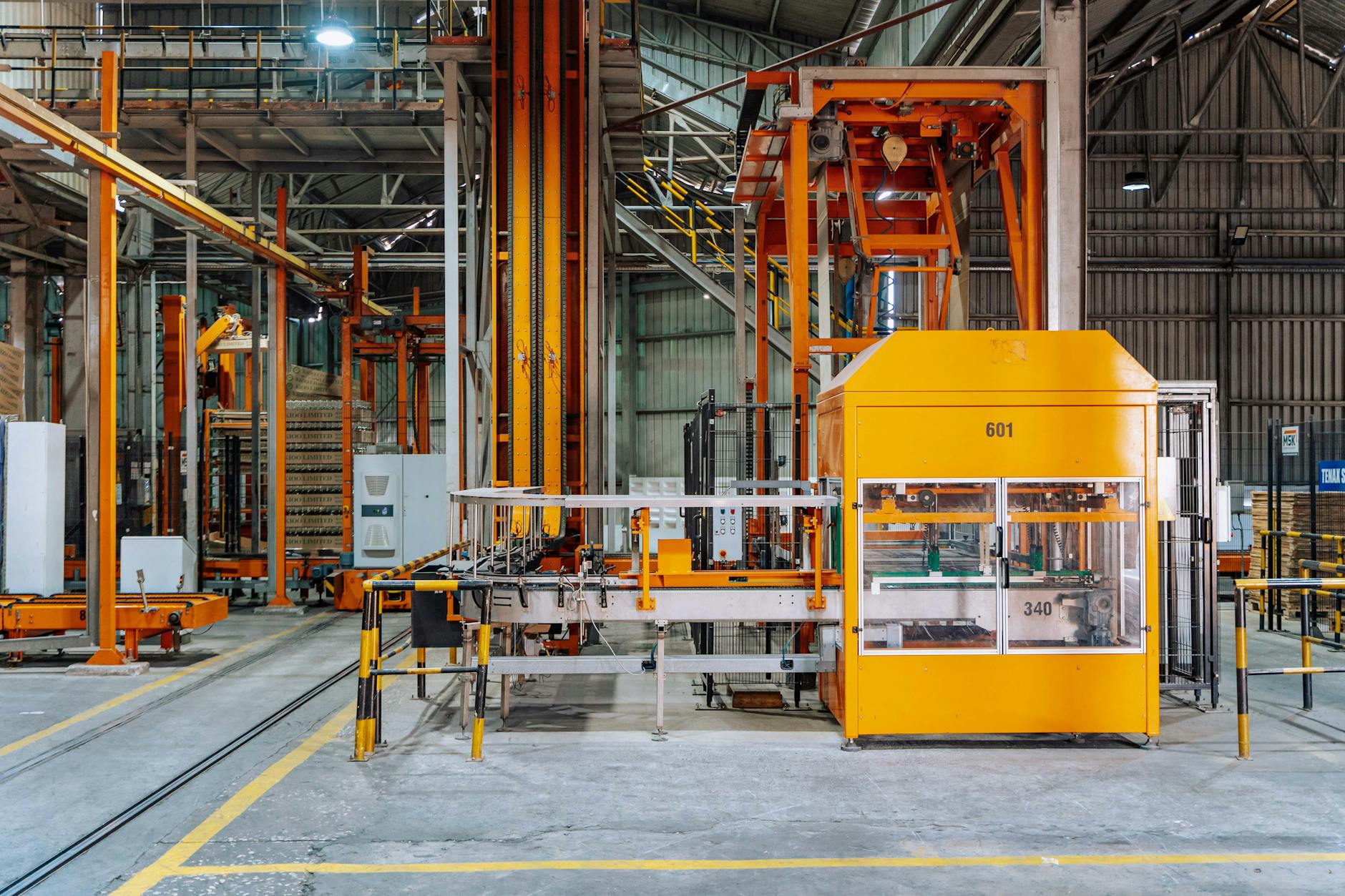
A robotics software company just crossed nine figures selling into mines, construction sites, and factories. Not warehouses. Not clean rooms. The places where your people quit, get hurt, or never show up in the first place.
The Signal
FieldAI, a startup building autonomous navigation software for robots operating in rugged industrial environments, hit $100 million in combined revenue and contracts. That number matters because of where it came from. Not Amazon fulfillment centers. Not Tesla's factory floor. Mines. Construction sites. Manufacturing plants with uneven terrain, dust, and zero GPS signal. These are the environments that have resisted automation for a decade because the technology could not handle them. Now it can, and your peers are writing the checks to prove it.
This is not a venture capital vanity metric. The $100 million represents actual customer commitments from operators who ran the numbers, cleared internal capex hurdles, and decided the payback justified the spend. That is a procurement signal, not a press release. When a critical mass of industrial buyers independently conclude that autonomous systems pencil out in the hardest possible operating conditions, the technology has graduated from experiment to infrastructure.
Source: Federal Reserve Economic Data (FRED) | NeuralPress analysis
The Industrial Production Index tells a parallel story. According to Federal Reserve data, US industrial output sat at 96.93 in June 2024 and reached 98.64 by May 2026. That is a 1.8% gain over two years. Flat. Operators are squeezing marginal output from the same constrained labor pool and aging equipment. That trajectory is the context for every decision below. When production barely moves despite sustained demand, the bottleneck is not the market. It is the workforce.
The Capex Decision You Cannot Defer
Industrial production inching up 1.8% over 24 months while labor costs climb 4% to 6% annually creates a math problem that no hiring manager can solve. The gap between output growth and wage inflation is the exact space where autonomous systems find their economic justification.
Operators face a binary capex question right now. Either allocate budget to autonomous equipment in the next planning cycle or accept that competitors who do will operate at structurally lower cost per unit within 18 months. FieldAI's $100 million milestone removes the biggest objection in every capex committee meeting: has anyone actually deployed this at scale? The answer is now yes, across multiple industrial verticals.
The framework for making this call is straightforward. Identify every role where fully loaded labor cost exceeds $75 per hour, attrition runs above 30% annually, or safety incident rates create measurable liability exposure. Those are your first candidates. Do not try to automate everything. Automate the positions you cannot fill or cannot afford to fill with humans at current rates. Request vendor proof of scaled deployments, not pilot results. FieldAI's number gives you a benchmark. If your vendor cannot point to eight figure customer commitments, they are still in the science project phase.
Workforce Strategy Shifts From Hiring to Redesigning
The persistent narrative in construction and mining has been we cannot find enough workers. That framing is now obsolete. The question is no longer how to find people. It is how to redesign operations so fewer people produce more output with autonomous systems handling the repetitive, dangerous, or remote tasks.
Federal Reserve data shows industrial output hovering between 95.4 and 98.6 for two straight years. That plateau exists because labor availability has capped production capacity. Every operator running second and third shifts knows the pain. Absenteeism runs 8% to 12%. Turnover on night shifts can hit 50% in some facilities. Overtime costs eat margins. The people you do find take six months to train and leave in nine.
The decision here is not whether to reduce headcount. It is whether to restructure roles around human machine collaboration before your workforce demographics force the issue anyway. The average age of a heavy equipment operator in the US is north of 45. Retirements will accelerate over the next five years regardless of what you do with robots.
Build your workforce plan around three tiers. Tier one: roles that autonomous systems can handle now with proven technology. Material transport, site surveying, repetitive earthmoving. Tier two: roles that require human oversight of autonomous systems. These are your retraining targets. Tier three: roles that remain fully human for the foreseeable future. Skilled maintenance, complex decision making, customer facing work. Map every position into a tier and staff accordingly.
The Equipment OEM Problem Nobody Is Discussing
If you sell construction or mining equipment, FieldAI's milestone is a direct threat to your business model. The company builds navigation software that works across equipment platforms. That means autonomy is becoming a software layer, not a hardware feature. Your customers will expect autonomous capability from their existing fleet, not from a new proprietary machine that locks them into your ecosystem.
Caterpillar, Komatsu, and John Deere have all invested in autonomous features tied to their own equipment. FieldAI's approach decouples the intelligence from the iron. When a third party software platform proves it can make any piece of equipment autonomous, the value shifts from the machine to the code running on it. That reprices your hardware.
The strategic decision for equipment manufacturers and distributors is whether to partner with platform agnostic software companies or double down on proprietary autonomous systems. History suggests platform plays win. Android did not build phones. Salesforce did not build servers. The companies that controlled the software layer captured the margin while hardware commoditized beneath them.
If you are a regional equipment distributor, this is existential. Your value proposition has been service, parts, and local relationships. If autonomy software becomes the decision driver for equipment purchases, customers will choose the platform first and the iron second. Start evaluating integration partnerships now. The distributors who become certified deployment partners for robotics software platforms will own the next decade. The ones who wait will sell commoditized metal at compressed margins.
Safety Liability Is the Sleeper Catalyst
Every construction and mining executive understands the direct cost of safety incidents. Workers comp premiums, OSHA fines, project delays. Few have modeled the second order effect: what happens to your liability profile when autonomous alternatives exist and you choose not to deploy them.
The legal doctrine is simple. Once a commercially proven technology exists that reduces worker exposure to known hazards, failure to adopt it becomes a factor in negligence analysis. FieldAI's $100 million in customer commitments establishes commercial viability. Plaintiff attorneys will cite it. Insurance underwriters will price against it.
The Industrial Production Index sitting essentially flat at 98.6 means operators are not growing into their risk. They are maintaining output with the same exposure to the same hazards at the same sites. Every quarter that output stays flat while autonomous alternatives mature, the risk reward calculation tilts further toward adoption.
Run a simple analysis. Pull your OSHA 300 logs for the past three years. Identify incident categories where autonomous systems could have eliminated human exposure entirely. Calculate total incident cost including direct medical, lost time, legal, and premium increases. Compare that number to the annualized cost of deploying autonomous systems in those same roles. For most heavy industrial operators, the safety case alone justifies the capex before you even factor in productivity gains.
The Operating Principle Going Forward
The industrial corridor just got its proof point. $100 million in customer commitments to autonomous systems in the hardest operating environments on earth closes the debate about whether this technology works. The only question left is whether you will be the operator who deploys it or the one who explains to your board why you waited.
This article is part of the Industry Intelligence series on NeuralPress. New analysis published daily.