
Berkshire Drops $6.8 Billion on Taylor Morrison Housing Bet
Berkshire's $6.8B Taylor Morrison acquisition creates the largest vertically integrated homebuilder. Building suppliers have 18 months to reposition before procurement consolidates.

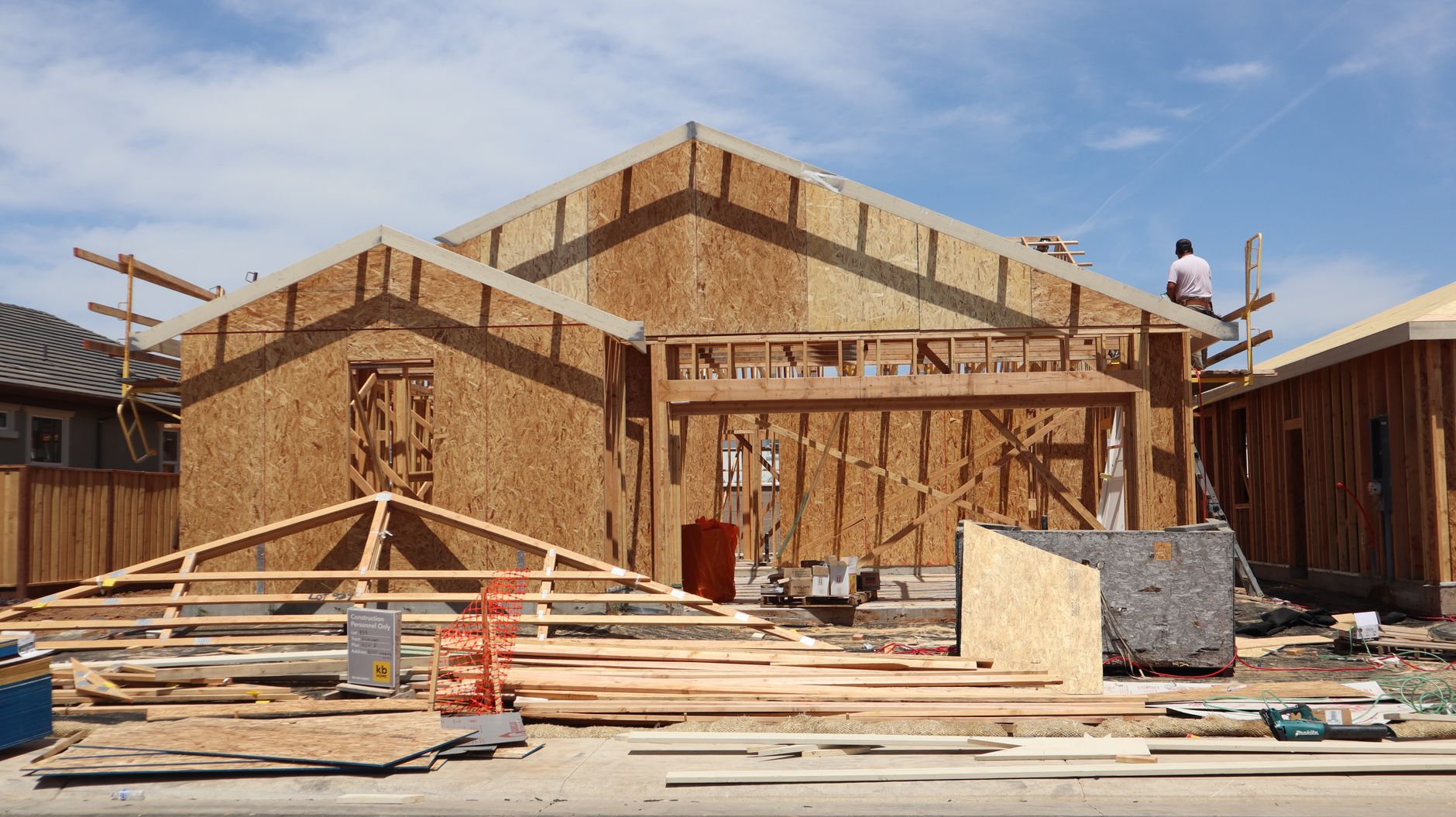
Greg Abel just made his first big bet. He picked dirt and drywall.
Berkshire Hathaway is acquiring Taylor Morrison Home Corporation for $6.8 billion in cash, folding one of the Sun Belt's most active homebuilders into a portfolio that already includes Clayton Homes and a constellation of building products businesses. This is not a financial play. It is a vertical integration play. And if you sell anything into the residential construction pipeline, you need to understand what just changed.
The Signal Behind the Check
Berkshire does not buy hope. It buys dislocation. The housing market has been grinding through a prolonged downturn, with starts bouncing between 1,269,000 and 1,507,000 over the past two years according to Federal Reserve data. That is not a boom. It is a floor. And Berkshire just announced that the floor is solid enough to build on.
The strategic logic is unmistakable. Berkshire already controls manufactured housing through Clayton Homes. It owns building products distribution. It has insurance businesses that underwrite construction risk. Adding Taylor Morrison gives it a conventional homebuilding operation in Texas, Arizona, Florida, and other high growth Sun Belt corridors. This is the largest vertically integrated homebuilding platform in the United States, assembled quietly over two decades and now activated with a single $6.8 billion transaction.
This is also the first major M&A move under Abel, who took the CEO seat in early 2026. The signal is not just about housing. It is about how the next era of Berkshire allocates capital. Abel chose a hard asset business in a cyclical trough with demographic tailwinds. Every industrial operator should read that sentence twice.
Source: Federal Reserve Economic Data (FRED) | NeuralPress analysis
That two year housing starts trend line is the context for every decision below. The numbers have been choppy, ranging from a low of 1,269,000 in July 2024 to a spike of 1,507,000 in March 2026. There is no hockey stick. There is no collapse. There is a market searching for direction, and Berkshire just supplied it with $6.8 billion worth of conviction.
Procurement Consolidation Is Coming and It Favors Scale
The immediate operational reality for building materials suppliers is consolidation pressure. Berkshire does not acquire businesses to let them operate independently forever. Clayton Homes and Taylor Morrison together represent a purchasing engine that will rationalize vendors, negotiate volume commitments, and squeeze margin from fragmented supplier bases.
If your revenue exposure to Taylor Morrison or Clayton Homes exceeds 10 percent of your top line, you have a decision to make in the next 12 months. Either you position to be a preferred vendor at scale, which means volume pricing, guaranteed capacity, and probably thinner margins, or you diversify your customer base before the procurement integration team shows up with a spreadsheet and a mandate.
The framework is straightforward. Map your current revenue across both Taylor Morrison and Clayton Homes projects. Identify the geographic overlap, particularly in Texas, Arizona, and Florida where Taylor Morrison is most active. Then model two scenarios. Scenario one: you win the consolidated contract and your volume doubles but your margin drops 200 to 400 basis points. Scenario two: you lose the consolidated contract and need to replace that revenue in 18 months. If you cannot survive scenario two, you need to start pursuing scenario one today.
Housing starts hit 1,465,000 in April 2026. That is a market with enough activity to support diversification if you move now. Waiting until Berkshire's integration team has a preferred vendor list is waiting too long.
Sun Belt Energy Infrastructure Becomes a Bottleneck Play
Taylor Morrison's footprint reads like a map of America's grid constraint problems. Texas. Arizona. Florida. These are states where population growth has outpaced utility infrastructure for a decade. Berkshire is about to pour development capital into communities that already struggle with peak load capacity.
For energy infrastructure companies, distributed generation providers, and backup power distributors, this is a geographic targeting gift. Taylor Morrison had active communities in over 20 markets before this deal. With Berkshire's balance sheet behind it, lot development and new community launches will accelerate. Each new subdivision of 200 to 500 homes in a grid constrained Sun Belt market represents demand for transformer upgrades, panel capacity, and increasingly for battery storage and solar integration.
The decision for energy operators is whether to pursue the developer relationship directly or continue selling through electrical contractors and trade partners. Berkshire's scale favors direct relationships. If you can offer a standardized energy package across multiple Taylor Morrison communities, you bypass the fragmented contractor layer and lock in volume. The window is before Berkshire establishes its own preferred energy infrastructure vendors, which history suggests takes 18 to 24 months post acquisition.
Federal Reserve data shows housing starts at 1,507,000 in March 2026, the highest reading in the data set. If that pace holds in Sun Belt markets specifically, the infrastructure gap widens. Position now.
Specialty Contractors Should Rethink Their Builder Portfolio
Here is a decision most trade contractors never think about until it is too late. Counterparty risk in homebuilding is real. Small and midsize builders go sideways in downturns. They delay payments. They cancel phases. They disappear. Berkshire backing Taylor Morrison eliminates that risk entirely for contractors working their projects.
The math changes when your general contractor has $300 billion in cash reserves behind it. You can commit to multiyear labor plans. You can invest in equipment specific to their specifications. You can sign fixed price contracts with longer terms because the probability of payment interruption drops to essentially zero.
But this creates a portfolio concentration question. If you shift crews and capacity toward Taylor Morrison projects because the money is safer, you become dependent on a single decision maker for your pipeline. Berkshire's procurement discipline means they will eventually benchmark your pricing against every competitor in the market. You get stability but you surrender pricing power.
The framework for specialty contractors is a 60/40 rule. Allocate up to 60 percent of capacity toward Berkshire backed projects for the cash flow certainty. Keep 40 percent deployed across independent builders where you maintain margin flexibility. Housing starts bounced between 1,273,000 and 1,507,000 over the last six months of the data set. That volatility means smaller builders will need reliable trade partners. Do not abandon them entirely just because a bigger checkbook showed up.
Capital Allocation Tells You Where the Cycle Is
Zoom out from the operational details and look at what Berkshire is actually telling the market. This is the most disciplined capital allocator in American business history making a $6.8 billion bet that housing has bottomed. Buffett spent decades teaching investors that you buy when others are fearful. Abel just executed that playbook in bricks and mortar.
For every industrial operator reading this, the question is not whether Berkshire is right. The question is whether your capital allocation reflects the same read on the cycle. If housing has bottomed, then capex decisions around warehouse capacity, fleet expansion, inventory positioning, and geographic coverage all need to be revisited.
The data supports a stabilization thesis more than a recovery thesis. Housing starts have been range bound for 24 months, never breaking sustainably above 1,500,000 or collapsing below 1,270,000. Berkshire is not betting on a spike. It is betting on a floor and building a platform to capture disproportionate share when volume eventually inflects upward.
If you run an industrial business that touches residential construction, ask yourself one question this week. Are you allocating capital like the cycle is ending or like it is about to turn? Berkshire just answered that question with $6.8 billion. Your answer does not need to be that loud, but it does need to exist.
The operators who win the next housing cycle will not be the ones who predicted the timing. They will be the ones who were already positioned when the volume arrived.
This article is part of the Industry Intelligence series on NeuralPress. New analysis published daily.