The AI Growth Paradox: Why Enterprise Leaders Must Stress Test the Demand Side
AI productivity gains could destroy the very demand companies need to realize them. Smart leaders are stress testing both sides of the equation.


Every boardroom deck I have seen this year has a slide about AI driven productivity gains. Most of them model 20 to 40 percent efficiency improvements. Almost none ask the obvious follow up question: who is buying your product when your customers' employees are gone too?
This is no longer a thought experiment. In just the first two months of 2026, 32,000 technology jobs have already been cut. In 2025, nearly 55,000 job cuts were directly attributed to AI out of 1.17 million total layoffs, the highest level since the 2020 pandemic. Forty percent of employers say they plan to reduce headcount where AI automates tasks this year. The displacement is real. But the second order effect, what happens to demand when the paychecks disappear, is the part almost nobody is modeling.
The Supply Side Story Everyone Loves
Here is the pitch we have all heard. AI automates tasks. Costs drop. Output increases. Margins expand. GDP goes up. Everybody wins.
On the supply side, the math checks out. McKinsey estimates gen AI could add $2.6 to $4.4 trillion annually to the global economy across 63 enterprise use cases. Factor in broader AI integration across existing software systems and that ceiling stretches toward $8 trillion. Enterprises are spending accordingly. Gartner projects global AI spending will hit $2.52 trillion in 2026, a 44 percent increase year over year, with $3.3 trillion projected for 2027. Eighty-eight percent of organizations now report using AI in at least one business function. The infrastructure buildout is not slowing down. The efficiency gains are measurable.
But there is a problem with modeling only one side of an equation. You get the wrong answer.
The Demand Side No One Wants to Model
Every dollar of revenue on your P&L started as someone else's paycheck. That is not philosophy. That is accounting.
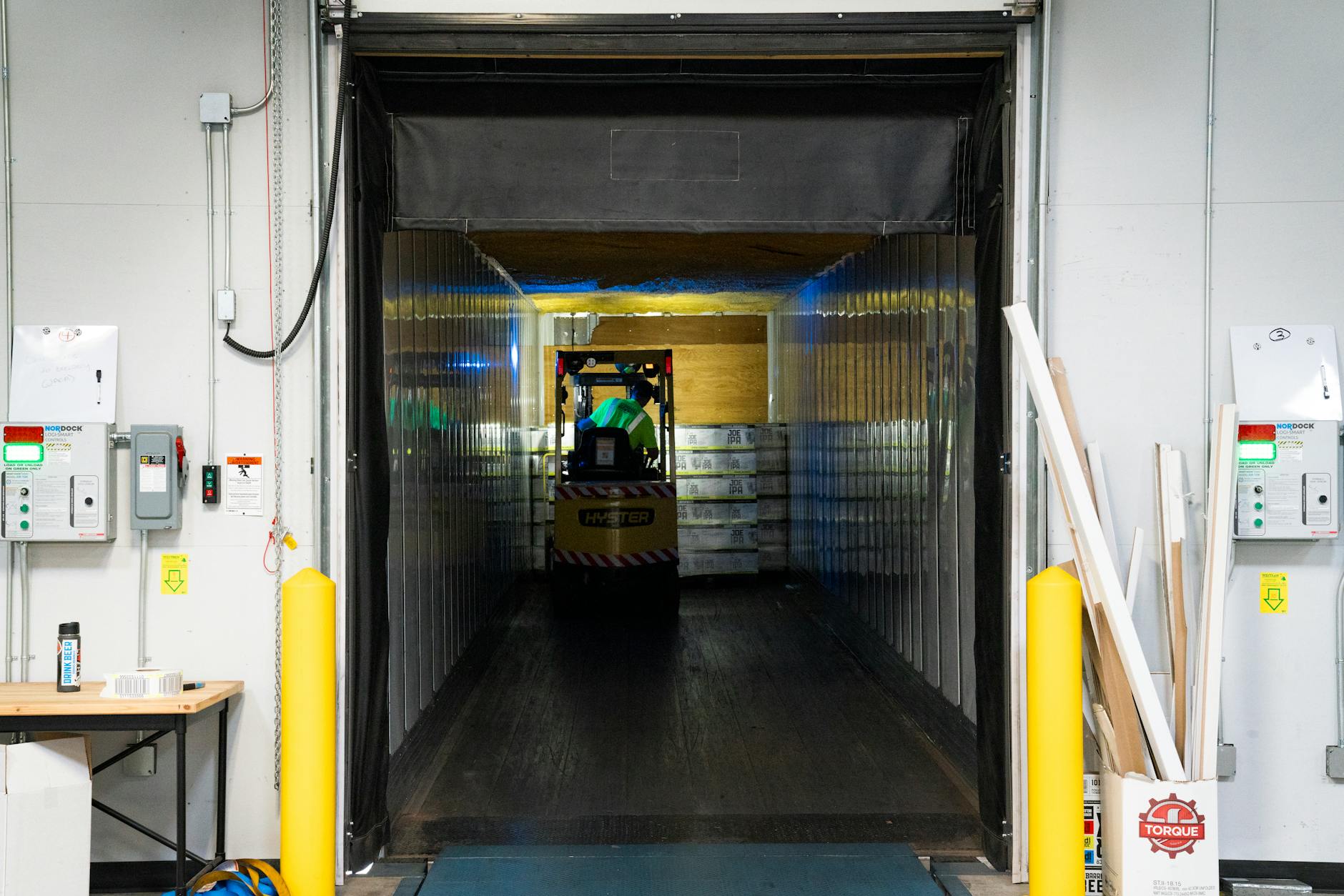
When AI replaces a warehouse coordinator, a claims processor, or a field service dispatcher, it removes cost from one company's ledger. It also removes purchasing power from the economy. Multiply that across millions of roles and you do not just have a labor market disruption. You have a demand destruction problem.
The numbers are starting to tell this story. Consumer spending's contribution to US GDP growth dropped from 2.6 percentage points to just 1.05 percentage points in the first half of 2025. AI investment picked up the slack, also contributing 1.05 percentage points. That is a structural shift. The economy is increasingly running on capital expenditure from a handful of hyperscalers rather than broad based consumer demand. Barclays' Q1 2026 outlook warns explicitly that if the AI boom falters, the wealth effect propping up consumers collapses with it.
This is the core paradox. AI productivity gains could suppress the very consumer and business spending that companies need to realize those gains. It is a feedback loop. You cut headcount to improve margins. Your customers cut headcount to improve theirs. Now there are fewer buyers in the market. Your revenue projections, the ones built on an assumption of stable or growing demand, start to look fragile.
Citrini Research calls this "Ghost GDP," a scenario where nominal GDP shows growth but the actual monetary benefits do not circulate within the economy because machines do not engage in consumer spending. Corporate profits surge while purchasing power erodes. The economy looks healthy on paper while the foundation underneath it hollows out.
This is not hypothetical doom. It is a modeling risk. And most enterprise AI strategies have zero contingency for it.
What This Means for B2B Revenue Forecasts
If you sell into industrial, home services, or SaaS markets like I have for 20 years, your revenue is downstream of someone else's headcount. B2B does not exist in a vacuum. It sits on top of consumer demand.
Consider a practical example. A home services platform grows because homeowners have disposable income and contractors have labor capacity. If AI displaces enough middle income workers and simultaneously enables fewer contractors to handle more volume, you might gain efficiency on the service delivery side while watching your addressable market contract.
The same logic applies in industrial distribution. In SaaS. In any sector where the end customer is a human with a paycheck.
The data suggests we are already in the early innings of this shift. Goldman Sachs estimates a 0.5 percent rise in unemployment during the AI transition. A Brookings analysis found 6.1 million workers in highly AI exposed roles lack the adaptive capacity to navigate displacement, and 86 percent of them are women. These are not abstract projections. These are your customers' customers.
Smart executives should be running two scenarios right now. One where AI lifts all boats. And one where AI lifts margins while sinking the waterline.
How to Hedge Your AI Transformation Bets
I am not saying stop investing in AI. I am saying stop investing in AI without stress testing your demand assumptions.
Three moves that make sense right now.
Model demand erosion scenarios. Take your three year revenue forecast and ask what happens if your total addressable market contracts 10 to 15 percent because of aggregate purchasing power loss. If your strategy breaks under that scenario, it is too fragile. McKinsey's own data shows that only 6 percent of companies qualify as high performers where AI contributes meaningfully to EBIT. The other 94 percent are still figuring it out. Do not build your revenue model on the assumption that your customers are in the 6 percent.
Invest in demand resilience, not just cost reduction. Companies that use AI only for headcount reduction are playing one note. Use it to create new revenue streams, enter adjacent markets, or deliver value that justifies premium pricing even in a tighter economy. The Solow Productivity Paradox from the 1980s is instructive. Computers were everywhere but productivity growth actually slowed. It took a full decade of organizational restructuring before the gains showed up in the macro data. AI is following the same pattern. Apollo's chief economist Torsten Slok recently updated Solow's observation: "AI is everywhere except in the incoming macroeconomic data."
Rethink workforce strategy as a market strategy. Your employees are someone else's customers. The companies that maintain employment and upskill workers are not just being altruistic. They are preserving the demand ecosystem they depend on. There is a reason Henry Ford paid his workers enough to buy the cars they built. In 2026, that logic is more relevant than ever. Gartner itself notes that AI is now in the "Trough of Disillusionment" and will most often be sold by incumbent software providers rather than bought as part of new moonshot projects. The improved predictability of ROI must occur before AI can truly scale across the enterprise.
The Real Risk Is Certainty
The biggest danger is not that AI causes negative growth. It is that enterprise leaders are so locked into the bull case that they have no plan for anything else.
Here is what we know. Spending is at $2.52 trillion and accelerating. Eighty-eight percent of organizations have adopted AI in at least one function. But only 20 percent report revenue growth from AI. Only 6 percent see meaningful EBIT impact. And 51 percent of organizations have already experienced negative consequences from AI deployment.
Every AI strategy I have reviewed treats productivity gains as inevitable and demand as constant. That is not a strategy. That is a bet with no hedge.
The contrarian scenario might not play out. But the companies that survive disruption are never the ones who assumed it could not happen. They are the ones who asked the uncomfortable question early, modeled the downside honestly, and built a strategy resilient enough to win either way.
This article is part of the Enterprise AI Strategy series on NeuralPress. New analysis published daily.