One Tornado Just Put 6,500 Jobs and Rivian's Future on One Zip Code
A tornado hit Rivian's only factory. 6,500 workers. Four million square feet. One point of failure. How to quantify geographic concentration risk in your next capex decision.


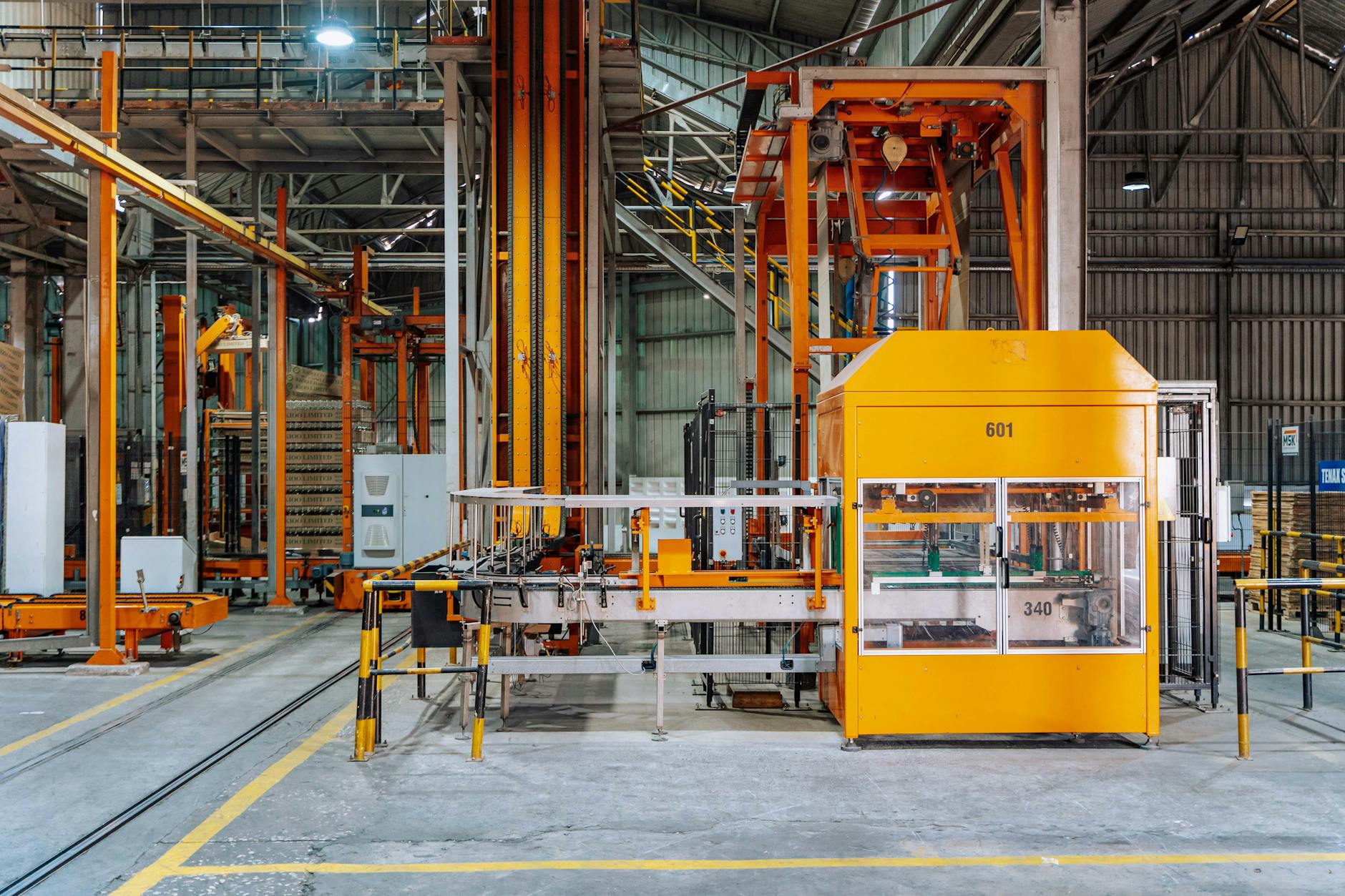
A single tornado tore through Normal, Illinois, and damaged the only factory Rivian has. Not one of several. The only one. Four million square feet of production capacity. Approximately 6,500 workers. And the entire R2 program, the mass market vehicle Rivian needs to survive, scheduled to begin production in 2026. The company has not disclosed a repair timeline or production impact estimate. That silence is the tell.
The Signal Nobody Planned For
This is not a Rivian story. This is a manufacturing strategy story. Over the past three years, the American reshoring narrative has been dominated by a single idea: consolidate production in large domestic facilities, capture economies of scale, and bring supply chains closer to the customer. It is a sound thesis on paper. In practice, Rivian just showed what happens when you put every egg in one building and a storm cell decides to visit.
The timing compounds the risk. Rivian's R2 is not a side project. It is the vehicle the company needs to reach profitability. Any production delay compresses an already tight runway. And the broader context matters here. According to Federal Reserve data, the Industrial Production Index sat at 98.0 in March 2026, up only 1.5 percent from 96.6 in April 2024. That is essentially flat. US manufacturing is not booming. It is grinding. Every facility, every production line, every scheduled ramp carries outsized weight in an environment where capacity utilization offers no margin for error.
Source: Federal Reserve Economic Data (FRED) | NeuralPress analysis
That flat trajectory is the context for every decision below. Industrial output is not surging in a way that absorbs disruption easily. When production goes offline in this environment, the gap does not fill itself. It compounds.
Single Site Concentration Is a Balance Sheet Risk
The old playbook said one mega factory equals lower unit costs. That math still works until it does not. Rivian's Normal plant handles everything. R1T trucks. R1S SUVs. Amazon delivery vans. And soon, the R2. One site. One point of failure. One tornado.
For any operator running a single site production strategy, the decision is straightforward but uncomfortable. You need to quantify what a 30 day, 60 day, or 90 day production stoppage actually costs you. Not in theoretical terms. In lost revenue, in contract penalties, in customer attrition, in capital that sits idle while insurance adjusters take their time.
The framework here is not about abandoning consolidation. It is about pricing the risk honestly. Run the scenario analysis. Take your annual production value, divide by 365, and multiply by your estimated downtime window. Then compare that number against the incremental cost of establishing even partial backup capacity at a second location. For most mid market manufacturers doing $200 million or more in annual output, the breakeven on geographic diversification is often closer than the spreadsheet initially suggests. Factor in rising insurance premiums in weather exposed regions, which have increased 15 to 30 percent in many Midwest corridors over the past two years, and the math shifts further.
The question for your next board meeting is not whether you can afford a second site. It is whether you can afford not to have one.
Supply Chain Operators Need to Map Their Rivian Exposure Now
If you sell components, materials, or services into the EV supply chain, the Rivian disruption creates an immediate decision tree. The company has not announced delays, but the damage is real and the R2 ramp is months away. Suppliers who wait for official communication are already behind.
The decision is about inventory positioning and customer diversification. If Rivian represents more than 10 percent of your revenue, you have concentration risk on top of their concentration risk. That is a compounding problem.
Here is the framework. First, contact your Rivian procurement counterpart this week. Not next month. Get a candid read on the repair scope. Second, identify which of your production lines are allocated to Rivian orders and calculate the carrying cost if those orders slip 60 to 90 days. Third, and this is the part most suppliers skip, identify which competitors might absorb freed capacity if the R2 timeline shifts. The Industrial Production Index has been hovering between 97.2 and 98.1 for the past six months. That tells you the broader manufacturing economy is running steady but not hot. Freed capacity in this environment does not automatically find a home. You need to be proactive about redirecting it.
The worst outcome is sitting on allocated inventory and committed labor with no purchase orders to match.
Climate Risk Is Now an Operational Planning Variable
This is not an environmental policy argument. This is a frequency and severity argument. The number of billion dollar weather events in the United States has increased from an average of roughly 8 per year in the early 2000s to more than 20 per year in recent years, according to NOAA data. If you operate a manufacturing facility anywhere in the central United States, your actuarial reality has changed.
The decision facing plant managers and COOs is whether to treat weather risk as an insurance problem or an operational design problem. Those are different responses with different cost structures.
The insurance approach is reactive. You pay premiums, you file claims, you wait. The operational design approach is proactive. You invest in structural hardening, redundant production capability, distributed inventory staging, and business continuity protocols that assume multi week facility outages. The companies that recover fastest from weather disruptions are the ones that planned for them before the forecast turned ugly.
Start with your facility vulnerability assessment. If your plant sits in FEMA Zone A or B for tornado, flood, or severe storm risk, you should be running quarterly continuity drills. Not annual. Quarterly. The Federal Reserve data shows industrial production dipped to 95.4 in October 2024 and took three months to recover above 96. That is the kind of stall that weather events inject into the system. Your planning horizon needs to assume these interruptions are not anomalies. They are the operating environment.
Capex Decisions Need a Resilience Multiplier
Most capital expenditure models optimize for throughput and unit cost. They rarely include a resilience multiplier, a quantified premium for geographic or operational redundancy. Rivian's situation is a case study in why that multiplier belongs in every capex model going forward.
The decision here is about how you evaluate your next facility investment. If you are planning a $50 million expansion, the traditional model asks where you get the best combination of labor cost, logistics access, and incentive packages. The updated model adds a column for catastrophic risk exposure and the cost of redundancy.
Here is the practical framework. Take your projected annual output from any single facility. Assign a probability to a multi week disruption based on historical weather data for that geography. Multiply the revenue at risk by that probability. That is your expected annual loss from concentration. Now compare it against the incremental cost of splitting that capacity across two sites. For many operators, the delta is 8 to 12 percent in added operating cost. Against a production environment where industrial output has gained only 1.5 percent over two years, that 8 to 12 percent feels expensive. But one tornado just demonstrated what expensive really looks like.
The companies that win the next decade of American manufacturing will not be the ones with the biggest single factory. They will be the ones that stayed running when the building next door did not.
The next time you sign off on a facility plan, ask one question your team probably has not modeled: what happens when we lose this site for 90 days? If the answer makes you uncomfortable, the plan is not finished.
This article is part of the Industry Intelligence series on NeuralPress. New analysis published daily.