Disney Promoted the Parks Operator to CEO and Changed Capital Allocation
Disney promoted its parks chief to CEO. That decision tells every hospitality operator exactly where to reallocate capital and why physical experience investments now outrank digital.

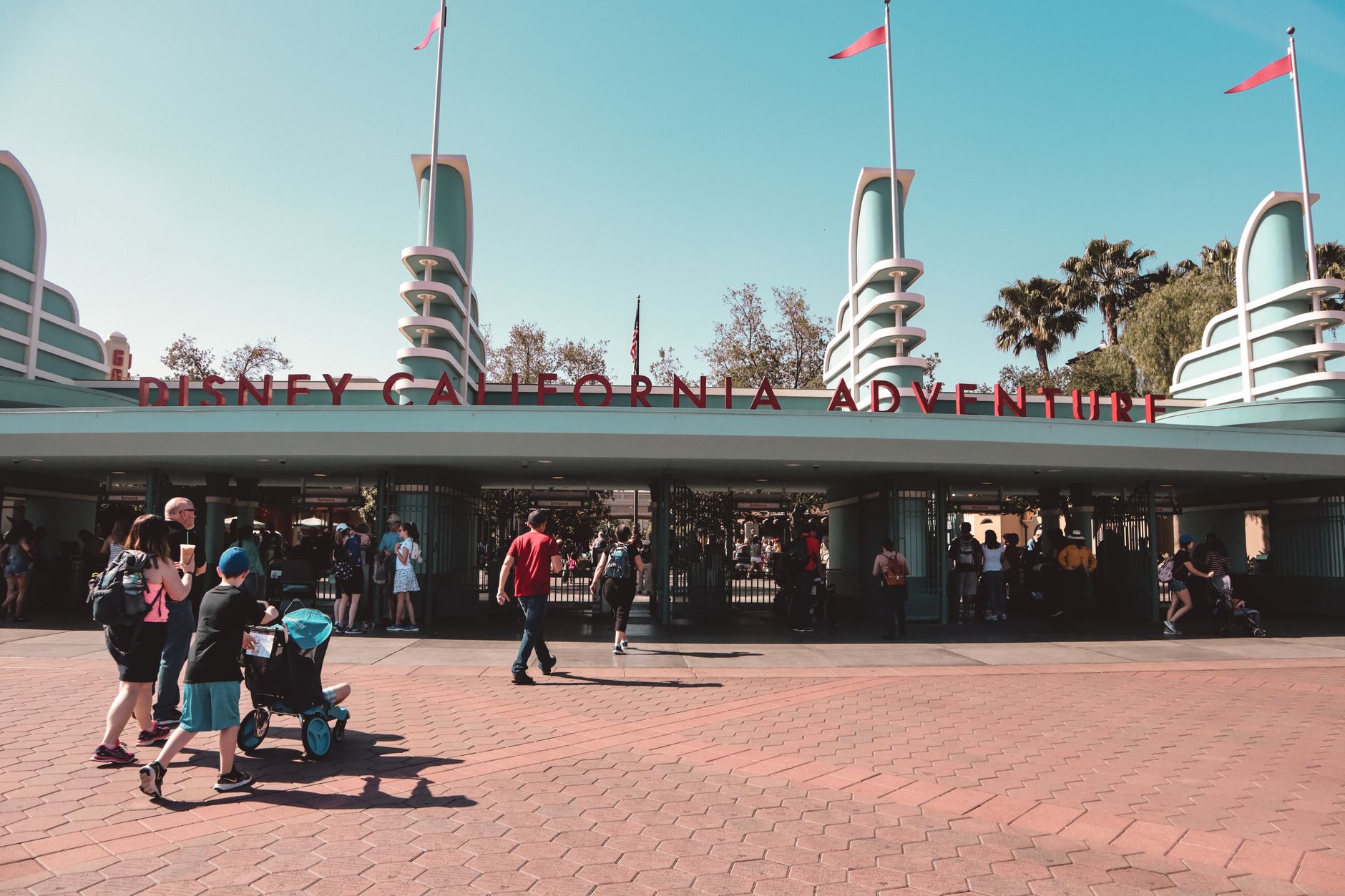
The most profitable division at Disney is not streaming. It is not Marvel. It is not Star Wars. It is the parks. The experiences segment has quietly become the financial backbone of the most recognizable entertainment company on the planet. And last week, Disney made that reality official by elevating Josh D'Amaro, the man who ran that division, to CEO. Not a content visionary. Not a dealmaker from the finance bench. An operations leader who spent his career optimizing guest flow, staffing models, and capital intensive physical spaces.
The Signal Nobody Can Ignore
This is the first time in modern Disney history that the board picked someone whose career was built in operations rather than content creation or corporate finance. That choice did not happen in a vacuum. Disney poured billions into streaming over the last decade. Wall Street rewarded them with essentially flat returns. The parks, meanwhile, kept printing money. D'Amaro's selection tells you exactly where the board sees durable margin. It tells you that immersive, branded physical experiences can command pricing power that a streaming subscription never will. And it tells every hospitality and retail operator something they should have tattooed on their forearm: operational excellence in physical spaces is now a board level strategic priority, not a line item to squeeze.
The timing matters. According to Census Bureau data, advance retail sales in the U.S. hit $733.5 billion in January 2026, up 7% from $685.3 billion in February 2024. Consumer spending on physical experiences and goods is not contracting. It is accelerating upward. That trajectory is the context for every decision below.
Source: Federal Reserve Economic Data (FRED) | NeuralPress analysis
Capital Allocation Just Got a New Benchmark
Disney did not promote D'Amaro because parks are nice. They promoted him because parks generate returns that streaming could not match after tens of billions in investment. That fact should force every hospitality and retail CFO to reopen their capex models.
The decision facing most operators right now is straightforward. You have a fixed capital budget. Some of it goes to digital channels, apps, loyalty platforms, and back office automation. Some of it goes to physical location upgrades, new builds, and guest experience redesigns. The ratio between those two buckets determines your next five years.
Here is the framework. Start with your trailing 24 month return on invested capital for each bucket. If your physical location investments are generating higher lifetime customer value than your digital spend, you are underweight on physical. Most operators are. They overindexed on digital transformation because the consultants told them to. Disney just told you something different. Retail sales climbing from $685 billion to $733 billion over two years confirms that consumers are still showing up and spending in person. If the world's largest entertainment company is betting its future on an operator who built cruise terminals and theme park expansions, your $4 million app refresh can probably wait. Redirect that capital to the guest experience layer that actually moves your margin.
Workforce Strategy Becomes the Moat
D'Amaro built his reputation on two things: guest experience design and the staffing models that deliver it. Disney calls their frontline workers cast members for a reason. The experience is the product. The people are the experience.
Every hotel chain, regional attraction operator, and retail anchor faces the same decision. Do you treat frontline labor as a cost to minimize or a capability to invest in? The answer determines your competitive position.
The framework here is simple but most operators ignore it. Calculate the revenue impact per trained employee hour. Not the cost. The impact. Disney has obsessively measured this for decades. They know that a well trained cast member in a high traffic area generates measurably more guest satisfaction, repeat visits, and per capita spending. D'Amaro's promotion signals that this approach is not a soft HR initiative. It is the operating model that won the CEO seat.
With retail spending holding above $730 billion per month through late 2025 and into 2026, consumer demand is not the constraint. Execution is. The operators who invest in training pipelines, retention programs, and experience delivery capability will capture disproportionate share of that spend. The ones who keep cycling through minimum wage hires will watch their guest satisfaction scores erode while the labor market stays tight.
Competitive Positioning in a Post Digital Hype Cycle
Here is the uncomfortable truth. A lot of hospitality and retail operators spent the last decade chasing digital transformation as a strategy rather than a tool. They built apps nobody opens. They launched loyalty programs that generate email spam. They invested in virtual experiences that customers tried once and forgot.
Disney tried the same thing with streaming. They spent aggressively. They acquired content. They burned cash. And the board responded by picking the guy who runs the physical business.
The decision for operators now is whether to follow or wait. If you are a regional hotel group or an entertainment venue operator, your competitive set is about to bifurcate. One group will double down on immersive physical experiences, staff training, and location quality. The other will keep spreading budgets thin across digital initiatives that do not move revenue.
The framework for this decision is market specific but the principle is universal. Audit every customer touchpoint. Rank them by influence on repeat purchase behavior. In almost every hospitality business, the top five touchpoints are physical. The lobby. The room. The restaurant. The interaction with staff. The ease of navigation through the space. If your investment portfolio does not match that ranking, you are misallocated. Census Bureau data showing steady retail sales growth above $730 billion per month tells you the consumer is ready to spend. The question is whether they spend with you or with the operator down the road who made their physical space worth returning to.
Succession Planning Says Everything About Strategy
Most boards will never admit that their CEO choice is a strategy document. It is. Disney's board looked at a roster that included content executives, finance leaders, and digital strategists. They picked the parks guy. That selection tells the market, employees, investors, and competitors exactly where the company is heading for the next decade.
If you sit on a board or run a leadership team, this is the decision worth examining. Who is in your succession pipeline? If every candidate comes from finance or digital, your bench reflects a strategy that Disney just explicitly rejected. The framework is not complicated. Map your succession candidates against your highest margin business units. If your most profitable division does not have a leader in the CEO pipeline, you have a structural gap.
D'Amaro spent years running the business unit that generated the most cash for Disney. He understood the capital requirements, the labor model, the guest psychology, and the operational complexity of physical experience delivery. That combination of skills is what the board valued above everything else. For hospitality and retail operators running $50 million to $500 million businesses, the lesson is direct. Develop leaders who understand your core operations at a granular level. The era of parachuting in a strategy consultant or a digital native to run an operationally complex physical business is ending. The boards that figure this out first will outperform.
The question for every operator reading this is not whether Disney made the right call. The question is whether your leadership structure reflects where your margins actually come from or where you wish they came from.
This article is part of the Industry Intelligence series on NeuralPress. New analysis published daily.