Cheesecake Factory Adds Pickle Fries to 250 Item Menu
The Cheesecake Factory added pickle fries to a 250 item menu. That decision tells distributors and equipment suppliers exactly where casual dining margin pressure is headed.

Cheesecake Factory Adds Pickle Fries to 250 Item Menu: What Distributors Need to Know
The Cheesecake Factory just added pickle fries, pork belly buns, and bowl format entrees to a menu that already exceeds 250 items. That is not a restaurant chasing trends. That is a $3.6 billion operator telling you exactly where margin pressure is forcing the entire casual dining segment to move. Shareable appetizers command 60 to 70 percent gross margins. Entrees sit at 50 to 55 percent. When the chain famous for never simplifying anything starts leaning into fried shareables and one vessel meals, the signal is loud enough to hear in every distributor warehouse and equipment showroom in the country.
The Signal Behind the Spring Menu
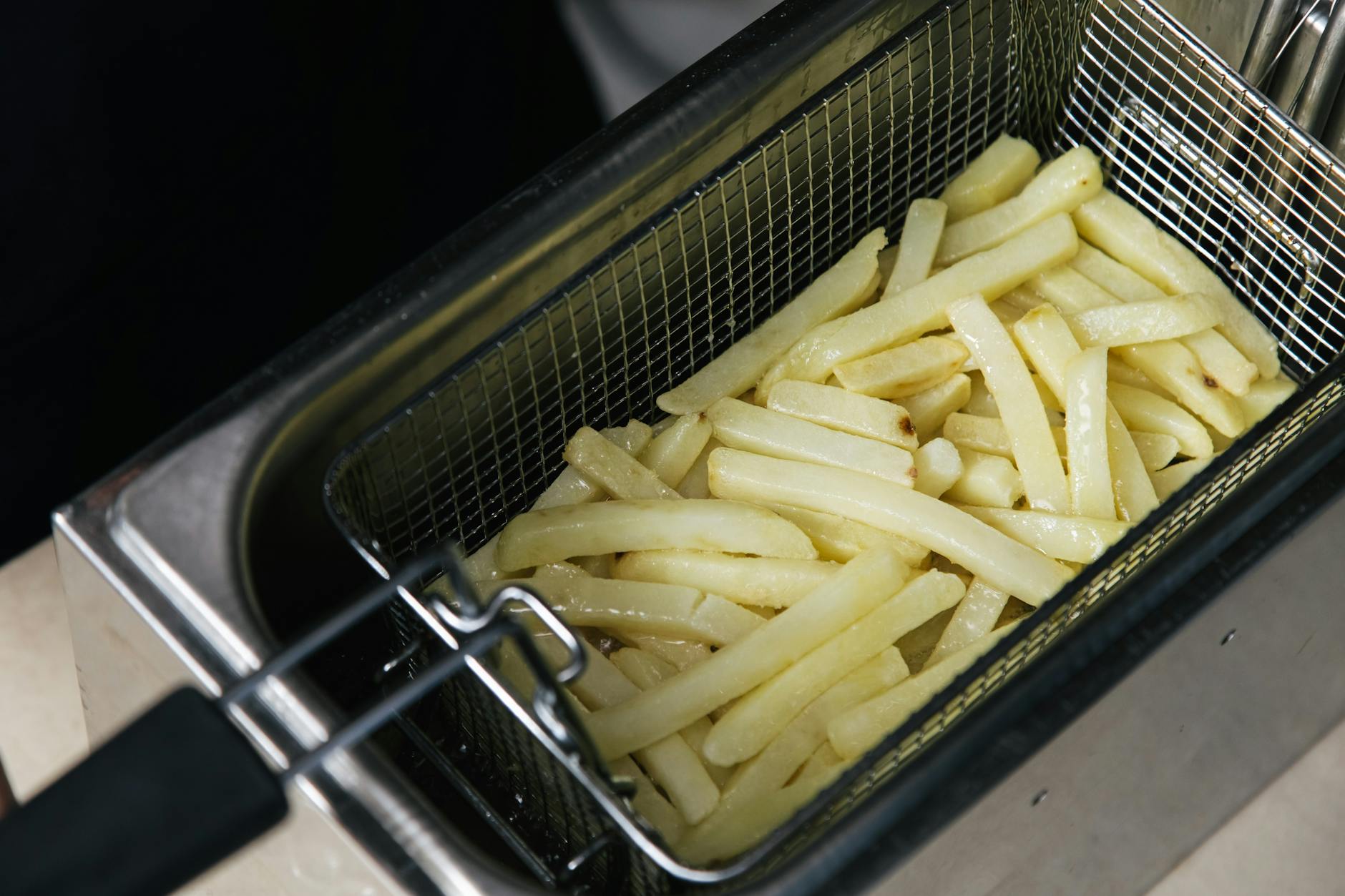
Business Insider's review of the new Cheesecake Factory spring menu reads like a food column. Read it like an operations brief instead. Pickle fries are a single protein free item that runs through existing fryer capacity. Pork belly buns are a shareable small plate with minimal assembly. Bowl formats consolidate what used to be multi component entrees into a single vessel with fewer labor touches per ticket. None of these additions expand kitchen complexity. They compress it.
That is the tell. When a brand whose entire identity rests on overwhelming variety starts adding items that reduce back of house friction, the calculus has changed. Traffic across casual dining remains pressured. Same store visits have not recovered to 2019 levels for most of the segment. So operators are not trying to drive new bodies through the door with these launches. They are trying to extract more margin from the bodies already seated.
Every pickle fry order that replaces a center of plate protein entree is a 10 to 15 percentage point margin improvement at the item level. Multiply that across 200 plus locations and you understand why this is strategy, not seasoning.
Source: Federal Reserve Economic Data (FRED) | NeuralPress analysis
That flat trajectory in the Industrial Production Index is the backdrop every operator in this segment is working against. According to Federal Reserve data, the index sat at 97.09 in March 2024 and crawled to just 98.30 by February 2026. A 1.2 percent gain over nearly two years. Industrial output is barely expanding. That means the broader economy is not generating the kind of consumer spending tailwinds that let restaurants grow through volume alone. The margin game is the only game.
Distributor SKU Strategy Needs a Hard Reset
Food distributors serving the casual dining channel should treat this menu shift as a leading indicator, not a one off product launch. If The Cheesecake Factory is tilting its 250 item menu toward shareable appetizers and simplified bowl builds, mid tier chains with 40 to 80 item menus will follow within two quarters. That means SKU velocity is about to shift.
Center of plate proteins, particularly premium cuts that require skilled prep, will see slower pull through. Portion controlled appetizer ingredients, pre breaded fry ready items, and sauce packets for bowl assembly will accelerate. The decision facing distribution leaders is straightforward. Do you wait for purchase orders to confirm the shift, or do you reposition inventory now?
The framework here is simple. Audit your top 50 casual dining accounts. Pull 12 month velocity data on appetizer versus entree ingredient categories. If appetizer SKUs are already trending up 8 to 12 percent year over year, the menu shift is underway whether your accounts have announced it or not. With industrial production essentially flat at 98.30 as of February 2026, you cannot count on volume growth to cover a misallocated warehouse. Every pallet slot matters.
Kitchen Equipment Suppliers Should Follow the Fryer
The operational implications for equipment suppliers are specific and immediate. Bowl formats and fried shareables do not require the same kitchen footprint as a full service prep line. They require fryer capacity, heated holding stations, and modular assembly surfaces. That is it.
The decision for equipment sales teams is whether to keep pitching full kitchen renovations or pivot toward modular retrofit packages that address exactly what operators are building toward. Consider the math. A fryer station retrofit runs $15,000 to $25,000 per location. A full kitchen redesign runs $150,000 plus. In an environment where the Industrial Production Index has moved less than 1.3 points in two years, operators are not signing six figure capital expenditure approvals for speculative capacity. They are approving targeted upgrades that pay back in one quarter through labor savings and throughput gains.
The framework is to lead with labor reduction per ticket. If a modular fry station lets a kitchen run one fewer prep cook per shift, that is $35,000 to $45,000 in annual savings per location. Position the equipment as a margin tool, not a kitchen upgrade. That language matches how CFOs are thinking right now.
Labor Pressure Is the Root Cause and It Is Not Easing
Strip away the menu creativity and what you find underneath is a labor cost problem. Shareable appetizers require fewer skilled touches. Bowl formats eliminate plating complexity. Pickle fries go from freezer to fryer to table with one person involved. Every item The Cheesecake Factory added this spring reduces the labor minutes per dollar of revenue generated. That is not coincidence. That is engineering.
The decision facing multi unit operators across the segment is how aggressively to pursue menu simplification when your brand identity depends on variety. The Cheesecake Factory can absorb the brand risk because their menu is so large that pruning complexity on new additions still leaves 250 items on the book. A 60 item casual chain making the same move is making a much more visible bet.
The framework is to benchmark your labor cost per menu item against your gross margin per menu item. Any item where labor cost exceeds 18 to 20 percent of its selling price and gross margin sits below 55 percent is a candidate for replacement with a shareable or bowl format alternative. Federal Reserve data showing industrial production stuck in the 95 to 98 range for two straight years tells you that wage pressure is not going to be rescued by a booming economy pulling workers into manufacturing and away from food service. The labor market for restaurant workers stays tight in a flat industrial environment because there is nowhere else for those workers to go and no reason for wage expectations to moderate.
Pricing Strategy Becomes a Menu Architecture Problem
Most casual dining operators think about pricing as a number on a line item. The Cheesecake Factory's spring additions reveal that the smarter play is pricing through menu architecture. A $14 appetizer split across a table of four feels like $3.50 per person. A $24 entree feels like $24. The perceived value math on shareables is fundamentally different from entrees even when the restaurant margin is higher on the shareable.
The decision for operators is whether to invest marketing and menu real estate in promoting high margin shareables or to keep pushing entree driven average checks. The framework starts with ticket decomposition. Pull your average ticket apart by category. If appetizer attachment rates are below 40 percent, you have room to push shareables through menu placement, server scripting, and digital ordering prompts. Every 10 percentage point increase in appetizer attachment at a 65 percent gross margin versus a 52 percent entree margin drops meaningful dollars to the bottom line. In an economy where industrial output has gained just 1.2 percent over two years, you are not going to grow your way to better unit economics. You have to engineer them one ticket at a time.
The Menu Is the Operating Plan
Stop reading restaurant menus as food lists. Read them as capital allocation documents. The Cheesecake Factory just told every distributor, equipment supplier, and competing operator exactly where casual dining margin pressure is headed. Toward fewer labor touches, higher margin small plates, and simplified formats that let kitchens do more with the same headcount. The only question left is whether you adjust your business before your customers force you to.
This article is part of the Industry Intelligence series on NeuralPress. New analysis published daily.